

Clearing the Path for the Future: Mine Action Efforts in Ukraine
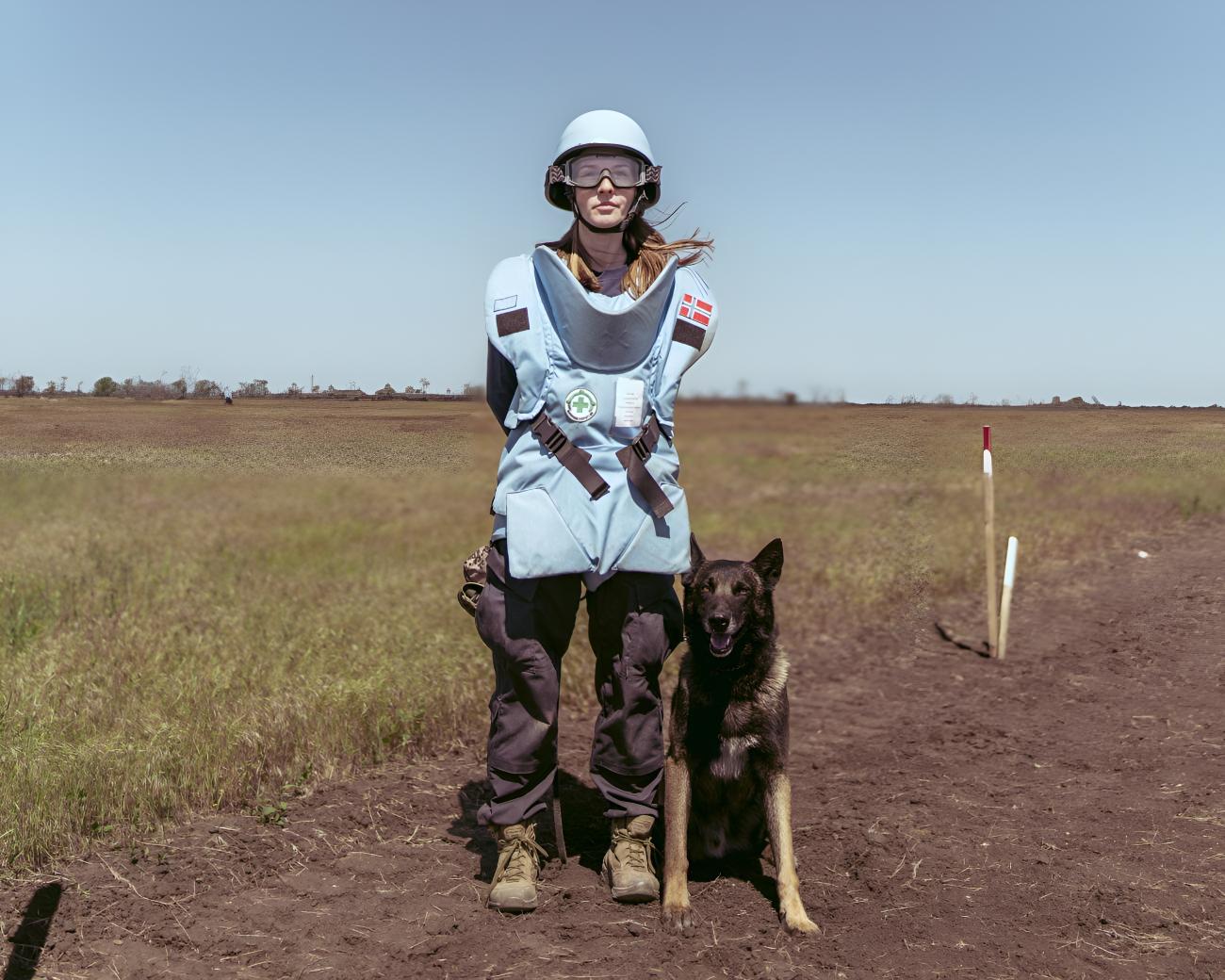
In Ukraine, the impact of explosive ordnance is often seen in what can no longer happen.
Fields can’t be planted, roads can’t be used, communities are unable to return home. With support from the United Nations, mine action efforts are helping to address these challenges through surveillance and clearance, risk education and technical support.
On Mine Awareness Day, the UN in Ukraine called on Member States, donors and partners to invest in mine action in Ukraine as a precondition of recovery and long-lasting peace.
The fields no one plants
Serhii and Iryna, a couple from Kamyanka in Kharkiv region, left their home in 2022 after hiding in the basement from hostilities for a few weeks. When they returned in 2023, their home was damaged, their belongings destroyed and the yard littered with debris and mines – the hidden danger that caused Serhii to suffer from serious injuries, requiring multiple surgeries.
“Every morning, I wake up and think – thank God we’re alive,” said Iryna. “We just want peace, to live without fear, to go to the market safely again.”
An estimated 20 per cent of Ukraine’s territory has been affected by landmines and explosives, an area larger than England and Wales combined. The consequences are both immediate and long-term: nearly 1,680 civilians have been killed or injured, over 9 million remain displaced in the country or abroad, many of them unable to return, and 67 per cent of agricultural areas are affected, costing Ukraine $11.2 billion annually.
“During my travels across the country, I’ve seen plenty of land contaminated by mines and explosives, especially in the frontline regions,” explains Matthias Schmale, the Head of the UN in Ukraine. “It affects people and economies. Clearing the land, making it safe again for living and production, is critical, not just for Ukraine, but for food security worldwide.”

The price of the future
According to the latest Rapid Damage and Needs Assessment, damage to the explosive hazards sector is estimated at $10.6 million, while losses reached $26.7 billion. The latter are mostly driven by reduced land use, disrupted transport and declining economic activity.
For people, this number means less safe movement, limited access to services, including medical ones, and restricted livelihoods, disproportionately affecting rural, frontline communities and returnees. The impact is also gender-specific: risks are higher for women working in agriculture, for men involved in debris clearance and for children in contaminated play and school areas.
Without making the land safe, it’s extremely difficult to rebuild houses and hospitals, or open farms and businesses. Demining is a prerequisite for Ukraine’s reconstruction, requiring an estimated $34.6 billion over ten years. On the bright side, mine action is the only sector that, under recent estimation, needs $2.2 billion less than last year. This was possible because of the innovations, expertise and more effective coordination employed in humanitarian demining.
To make life on land possible
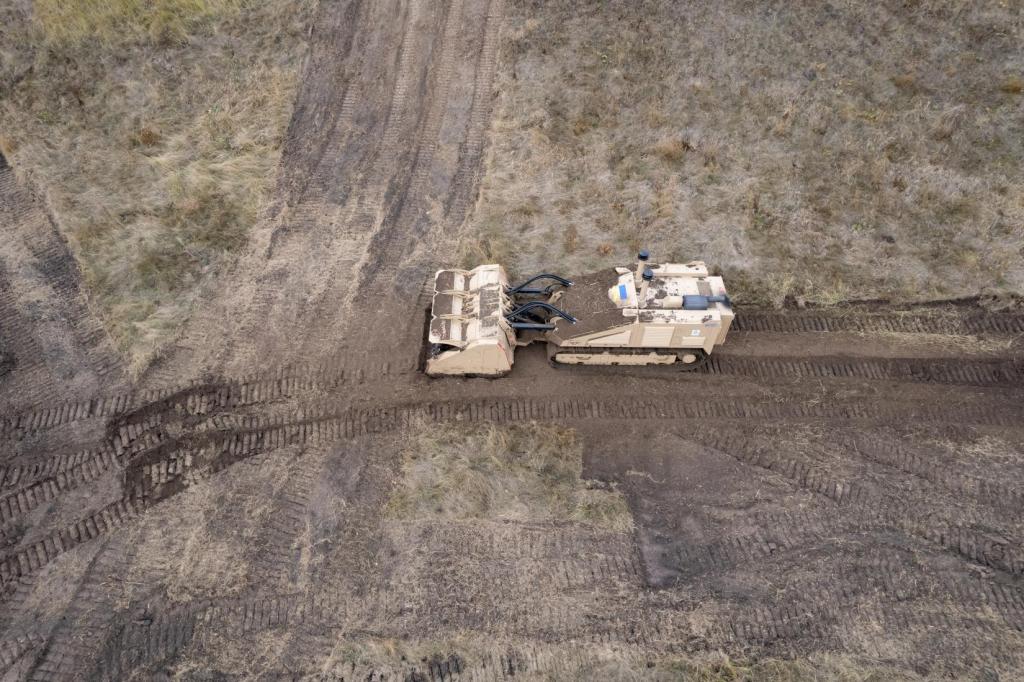
In support of Government and national mine action actors, the UN in Ukraine continues to introduce innovative technologies to survey and clean the land; to equip deminers with protective gear, specialised machines and knowledge; to provide support to survivors and farmers, ready to return to the cleared land; and to engage more veterans and women in mine action.
Accelerating land release has been one of the priorities for the UN in Ukraine and its partners. In 2025, the UN Development Programme (UNDP), World Food Programme (WFP) and Food and Agriculture Organization (FAO) enabled the release of over 7,600 hectares of mine‑suspected land, directly benefiting over 11,500 people. In addition, UNDP processed 99,000 tons of debris from 43 buildings across Kharkiv, Sumy and Mykolaiv, enabling reconstruction and reducing environmental risks.
People are the key to mine action, those who operate in the field and those who coordinate. UNDP equipped 202 State Emergency Services of Ukraine (SESU) demining teams, while the UN Office for Project Services (UNOPS) delivered over $9.5 million worth of vehicles, ambulances and a remotely operated demining machine to a full demining battalion of over 420 people. Both agencies have been working continuously to provide hundreds of deminers with knowledge and expertise in mine disposal, underwater demining and the use of technology and automation.
UN Women, jointly with partners, has been working to support women in the mine action sector, where they have traditionally been underrepresented and often limited to administrative positions. In 2025, 26 women received training to enable them to lead mine action.
Two years ago, 35-year-old Tetiana joined the demining team at “The HALO Trust,” eventually qualifying to lead both manual and mechanical demining operations.
“At first, it was very stressful. Fear mixed with adrenaline. But knowing that my work directly contributes to people’s safety was incredibly motivating,” she recalls.
Now leading a team of nine, she oversees daily operations, assigns tasks and ensures strict safety procedures are followed. Although only one woman is on her current team, around 30 per cent of HALO Ukraine staff are women, including in leadership roles. Tetiana believes there should be more.
“Ukrainian women are incredibly strong,” she says.
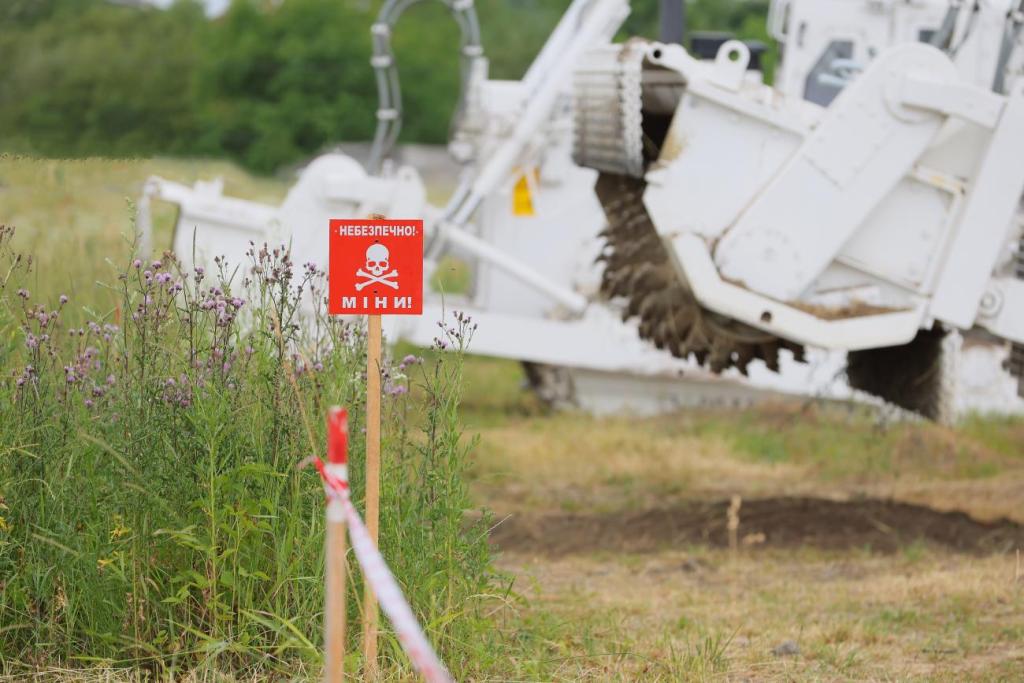
Being safe means being aware
Despite growing awareness of mine risks, many people in Ukraine, especially children and young people, continue to be exposed to danger. According to the UN Children's Fund (UNICEF), while 80 per cent of adolescents can identify explosive threats, more than half in contaminated areas still take risks. Boys aged 14 to 17 are particularly affected, accounting for nearly 80 per cent of child casualties since 2022, often due to exploring forests, fields and abandoned sites.
UN agencies are working with communities in staying safe from explosive hazards, supporting survivors and training professionals in assisting survivors. In 2025, 1.5 million children received life-saving information on how to protect themselves from mines and explosives through UNICEF-supported campaigns and activities. Over 500,000 adults received explosive ordnance risk education sessions and leaflets to reduce safety risks in affected communities.
Funded by the European Union, UNOPS handed over virtual reality goggles to the State Emergency Service of Ukraine to showcase the dangers of hazardous items and what to do if they encounter them, but in the safety of the classroom.
“The new tech is going to be integrated into our awareness raising and outreach work,” explains Serhii Tarasov, Head of the Institute for Engineering and Special Training at the National University of Civil Protection in Cherkasy. “With the way the devices let the user see threats in a realistic environment, they will certainly improve audience engagement and help us shape the right behaviour patterns among our trainees.”

Next steps: Innovative technologies and the need for further investments
Ukraine has been integrating innovative technologies into mine action, from AI-powered mapping to tailored support for people who have suffered from mine accidents. The country’s growing expertise in demining has the potential to make a change both in Ukraine and in other countries facing similar risks.
The response is Government-led, with the UN’s continuous support through strategic planning, operational strengthening, coordination and data integration. To meet current and future needs, Ukraine’s mine action requires stronger investments to scale national systems and to deploy new technologies that make demining faster and safer. It is also important to involve more people with disabilities, veterans and women in demining work, and to expand support for survivors and their families.
“These priorities show that mine action is not a Sisyphean task, but a practical investment that lays the foundation for lasting peace and safety in Ukraine,” sums up Matthias Schmale. “With sustained international commitment, it can deliver meaningful, long-term results for affected communities.”
This story was originally published by the UN team in Ukraine. Please visit the UN team's website for more information about the UN's work in Ukraine.





Latest news and updates