Measuring Vulnerability Honestly: a Turning Point for Small Island Developing States
This blog was authored by Simon Springett, UN Resident Coordinator, Barbados and the Eastern Caribbean; Sai Navoti, Chief, Small Island Developing States Unit, Division for SDGs, UN Department of Economic and Social Affairs; and Miosotis Rivas-Peña, Director, Subregional Headquarters for the Caribbean, UN Economic Commission for Latin America and the Caribbean.
The world’s most climate-exposed countries are not necessarily poor, but they are deeply at risk—a reality our current systems fail to see.
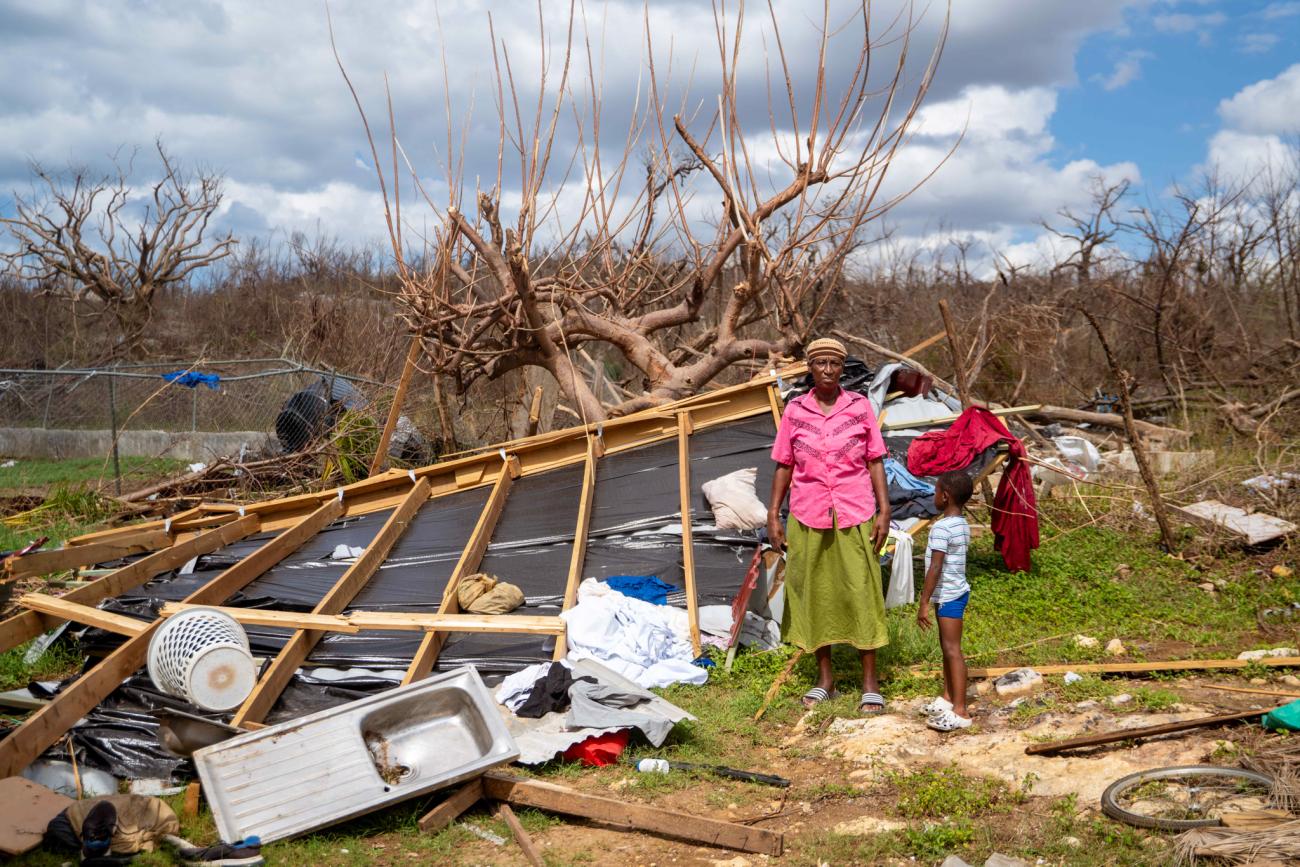
While many Small Island Developing States (SIDS) look stable on paper based on their income, constant climate disasters are chipping away at their progress. Between 1970 and 2020, extreme weather events caused an estimated $153 billion in losses across SIDS, dwarfing their average national Gross Domestic Product (GDP) of just $13.7 billion. Today, 14 of the 20 countries with the highest disaster losses compared to their economy's size are SIDS. In years when storms strike Caribbean SIDS, losses average 17 per cent of GDP; in 2017 alone, Hurricane Maria cost the Commonwealth of Dominica 225 per cent of its GDP.
As a result, progress on the Sustainable Development Goals (SDGs) has stalled, with 45 per cent of regional targets either standing still or sliding backward. These challenges are not anomalies, but permanent hurdles that global rules have long ignored when deciding who gets financial help.
More than a new formula
The root of this problem is a labeling error that SIDS have fought for years to fix. Many are classed as "middle-" or "high-income," a label that cuts off access to low-interest loans exactly when they need to invest in resilience.
The adoption of the Multidimensional Vulnerability Index (MVI) by General Assembly Resolution 78/322 in August 2024 is the result of decades of hard work. This move was more than just approving a new math formula; it was a global admission that income alone is a poor way to judge if a country needs support.
Research shows there is no real link between a country's income and its MVI score across SIDS: they measure different things. A nation can have a high average income but still be physically fragile and unable to bounce back, a situation the UN calls “double fragility”. The average MVI score for SIDS is 55-58, compared to a global average of 52.9—a gap that income statistics hide. The MVI, paired with a detailed "Country Profile" (VRCP), finally gives these nations a way to tell their whole story.
Global support for the MVI is growing. The 2025 Sevilla Commitment invites banks and global groups to use the MVI to guide their policies and make it easier for vulnerable countries to access affordable funding.
This is a major step forward: the MVI now has recognition not only within the UN system but within the broader financing for development landscape. The Caribbean Development Bank is already looking at how these scores could change which members qualify for aid. The next goal is to build the local evidence that makes this shift permanent, an effort backed by the Antigua and Barbuda Agenda for SIDS (ABAS).
Piloting new perspectives
In this light, the pilot project completed in January 2026 by UN teams in the Caribbean and New York is a major leap forward. Working with Saint Kitts and Nevis, the project created a roadmap for Country Profiles that can be used anywhere. The structure of these profiles is vital because it looks at everything from the national economy down to the struggles of individual families—details that standard reports often miss.
Crucially, these profiles work with existing government plans rather than creating extra work. The Saint Kitts and Nevis pilot showed that while national offices are stable, the country remains highly exposed to climate, trade and financial shocks, with families being the most at risk. This is the "double fragility" mentioned earlier, now mapped out in clear, useful detail.
The money gap these profiles aim to fill is very real. Hurricane Beryl caused approximately $219 million in economic damage in Grenada in 2024, equivalent to 16.5 per cent of GDP. In Saint Vincent and the Grenadines, the same storm inflicted $230.6 million in direct damage, approximately 22 per cent of GDP, with some islands losing 80 per cent of everything they had.
In Barbados, while striking as a Category 3 storm, overall effects were estimated at Bds$193 million (approximately US$96.5 million and approximately 1.4 per cent of GDP), concentrated in the fisheries, tourism and coastal infrastructure sectors. Even with record-breaking insurance payouts and debt relief, only about a quarter of Grenada’s losses were recovered.
Then, in October 2025, Hurricane Melissa hit Jamaica as the strongest storm in its history, causing total losses of $12.2 billion, equivalent to 56.7 per cent of GDP. This is not a failure of planning; it's a flaw in a system that doesn't account for risk. These Country Profiles provide the data needed to demand funding that matches the actual danger.
The critical next chapter
The stakes of completing the remaining pilot profiles before the Expert Panel begins its work cannot be overstated. The General Assembly resolution establishing the Independent 15-member Expert Advisory Panel for the 2026-2030 term calls explicitly for at least four pilot profiles to be completed in advance.
These pilots are not just examples; they are the evidence the Panel will use to decide how the Multidimensional Vulnerability Index works for all countries. They are the foundation on which the Panel will assess methodology, refine indicators and determine the operational parameters of the Country Profiles for global implementation.
The first pilot is done. Every new one finished before the Panel meets helps shape the future of this tool. The window of opportunity is open, but it won’t stay open forever.
From vulnerability to visibility
This is also a landmark year for the United Nations as it turns 80. The "UN80" reform goal is to ensure the UN makes the biggest impact possible with limited funds. With 68 per cent of global goals off-track, the UN’s reputation depends on using tools that identify who truly needs help. These Country Profiles do exactly that. Vulnerability that isn't measured can't be funded. The MVI provides the ruler; the Country Profile puts it to use on the ground.
As authors representing the UN’s economic experts and its teams on the front lines, we call on all partners and banks to support the final pilot projects immediately. The facts are clear, the method works and the mandate is there. We only need the will to act. Island nations have waited long enough to be seen for who they are. The tools are ready. The moment is now.
This blog was originally published by the UN team in Barbados and the Eastern Caribbean. Please visit the UN team's website for more information about the UN's work in Barbados and the Eastern Caribbean.





Latest news and updates