Cabo Verde: Rethinking Tourism, Reducing Waste
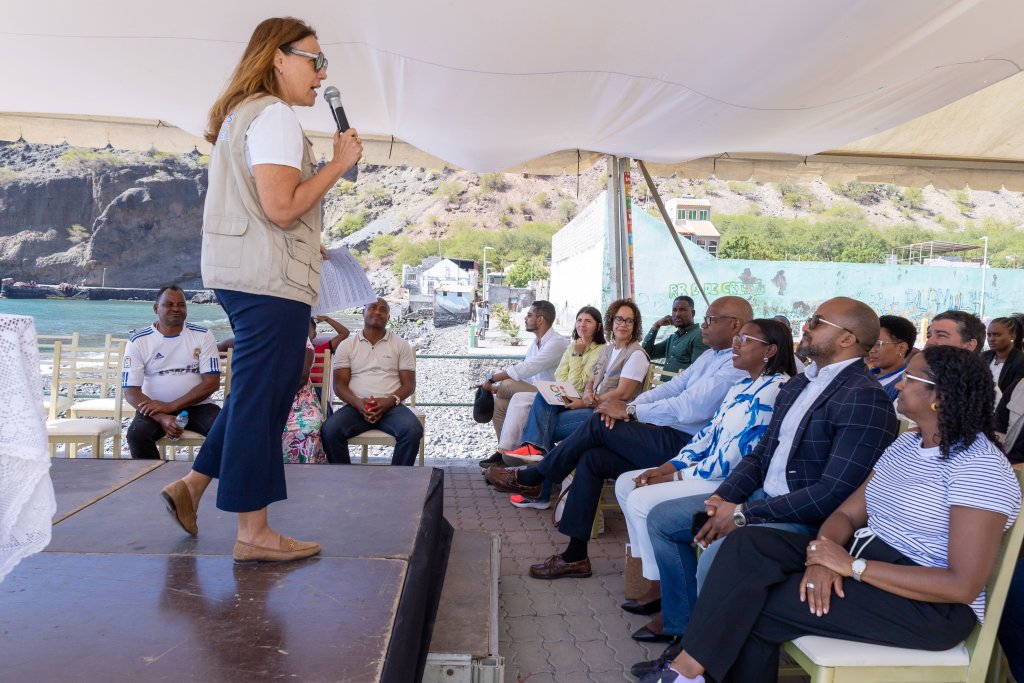
Patrícia Portela de Souza, UN Resident Coordinator in Cabo Verde, explores how a Joint SDG Fund programme is supporting the island of Boa Vista in protecting its environment from uncontrolled waste as tourism continues growing.
The day after our first Steering Committee in Boa Vista, I visited a beach where broken glass shone in the sand. An hour later, I stood in a small sorting facility where a local initiative, Desplastificar Boa Vista, separates and compacts plastic that would otherwise end up in the island's only dump, an uncontrolled open site. Later that day, a big resort showed us how it is cutting waste in its own operations. Those three scenes sum up the challenges and the opportunities we are working on.
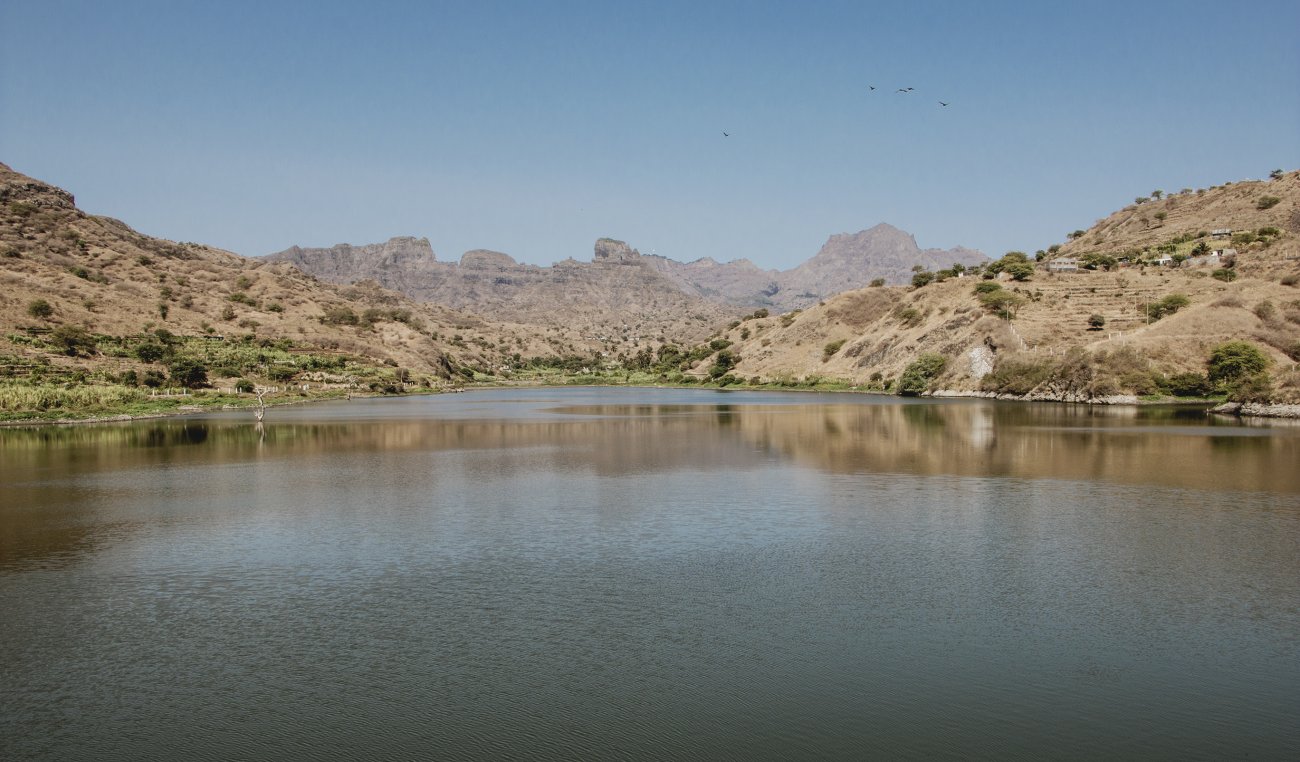
Boa Vista receives around 300,000 tourists annually for 15,000 inhabitants. Tourism represents 25 per cent of Cabo Verde's Gross Domestic Product (GDP), and Boa Vista is the island with the highest growth potential. Growth brings waste, and on an island, there is no "away" in "throw away". The Government of Cabo Verde and the Municipality of Boa Vista asked the United Nations to help them answer one question: how can the island keep growing as a touristic destination while protecting the beautiful environment that makes it attractive?
Leadership: one table, one plan
No single institution could answer it alone. Waste management is a municipal competence, tourism policy is national, investment comes from the private sector and technical expertise sits across several UN entities. My role as Resident Coordinator has been to bring all of them to the same table.
The Joint Programme "Building public-private partnerships to boost circular economy", financed by the Joint SDG Fund, brings together the UN Industrial Development Organization (UNIDO), UN Environment Programme (UNEP) and UN-Habitat under the leadership of the Municipality and the Government. This arrangement matters: it makes clear that this is a national and local programme supported by the UN.
Our Steering Committee brings together the ministries responsible for environment, tourism and the economy, the national water and sanitation agency, the tourism private sector and civil society. For me, joined-up action means that UNEP's work with hotels and the Government on circular economy, UN-Habitat's analysis of waste flows and municipal finances, and UNIDO's feasibility study for a public-private partnership all feed into one investment package, instead of three separate initiatives.
Ownership is the other side of meaningful change. The Municipality has contributed with staff support and in-kind resources to every assessment, and local volunteers were trained to collect data. That ownership and the sense of environmental urgency are what will keep the system running long after the programme ends.
Impact on people and policy: evidence first
UN-Habitat's Waste Wise Cities Tool, applied with 21 trained local volunteers and 90 households, shows that organic and plastic waste together represent 62 per cent of municipal solid waste, and that around 133 tons of plastic leak into the environment annually. On the coastline, teams measured more than two tons of litter per kilometre, two thirds of it plastic.
In the eight largest hotels, which account for around 2.2 million overnight stays a year, UNEP, UNIDO and the TUI Care Foundation connected what hotels buy with what they throw away. The result: between 2,300 and 2,600 tons of waste a year, more than one kilogram per guest night. More than 63 hotel managers, suppliers and staff took part in a circularity workshop and green skills training.
With hotels and suppliers, the programme is preparing pilots for food waste prevention using UNEP's Recipe of Change approach. The pilots will be about reducing single-use amenities and packaging, water refill solutions and glass return and reuse. The Target 8.9 Circular Lab will connect local entrepreneurs, artisans and waste recovery businesses with the tourism market. Behind these pilots are people: new green jobs, including for women and young people, and a path towards formal and safer work for the informal waste collectors who already recover materials.
On the policy side, the assessment identified a waste collection fee to improve the financial sustainability of waste management, to protect the most vulnerable ones particularly given that tourism-related businesses generate an estimated 81 per cent of the island’s waste. Further discussions with stakeholders will help refine these options. Together with recommendations on regulatory gaps and incentives for circular practices, these are the building blocks of a waste system that can finance itself.
From a grant to an investment
The Joint SDG Fund contribution is designed to unlock much more. The programme aims to leverage around $20 million in additional financing, eight dollars for every dollar from the Fund.
In June, at the Bilbao Bootcamp organized by the Joint SDG Fund, investors gave our delegation a clear message: speak the language of business, demonstrate financial sustainability and show how the model can be replicated across the islands. We are applying that lesson.
UNIDO's feasibility study for a public-private partnership in integrated solid waste management is in its final stage and will be modelled with the Computer Model for Feasibility Analysis and Reporting (COMFAR), UNIDO's financial analysis software. In October, Municipal and national Government technicians were trained on COMFAR through practical case studies, and the tool was used to simulate key data and assumptions. Discussions are underway with the private sector to mobilise financing beyond the grant.
What comes next
In 2027, Phase I will deliver validated studies, a financial model for the partnership and a portfolio of priority circular economy solutions, with pilots co-designed with hotels and suppliers. Phase II will move from studies to implementation: advancing public-private partnership based on the feasibility study, investing in sorting and treatment infrastructure, scaling solutions with hotels and suppliers, and preparing replication.
Islands feel the impact of waste first. They can also lead the solutions. What I saw in Boa Vista is what joined-up UN action should look like: national and local leadership, shared evidence, private sector involvement and UN entities working as one team.
Note:
All joint programmes of the Joint SDG Fund are led by UN Resident Coordinators and implemented by the agencies, funds and programmes of the United Nations development system. With sincere appreciation for the contributions from the European Union and Governments of Belgium, Denmark, Germany, Ireland, Italy, Luxembourg, Monaco, the Netherlands, Norway, Poland, Portugal, the Republic of Korea, the Kingdom of Saudi Arabia, Spain, Sweden, Switzerland and the Arab Gulf Programme for Development.
This story was originally published by the Joint SDG Fund. Please visit the UN team's website for more information about the UN's work in Cabo Verde.


Latest news and updates