Nepal: A Harvest, an Inbox and a Helicopter
A World Food Day story of how a Facebook message flew a harvest to market
This World Food Day story does not begin in a field. It does not begin on a plate. It begins on 26 August, when the Bhotekoshi flood swept through Rasuwa and took lives, homes, bridges and roads with it.
High above the river, in Aamachhodingmo Rural Municipality in northern Rasuwa, the water never came. The indigenous Tamang farmers of Gatlang and Gre of Aamachhodingmo watched their season ripen as planned: cabbage, potatoes, a cool-climate harvest that fetches good prices in the markets below.
But the markets below were now out of reach. The flood had taken the road, the community’s one lifeline down the valley. Across four wards, an estimated Rs 80 million (approximately $840,000) worth of vegetables sat in fields and sheds, waiting for a road that would not return any time soon.
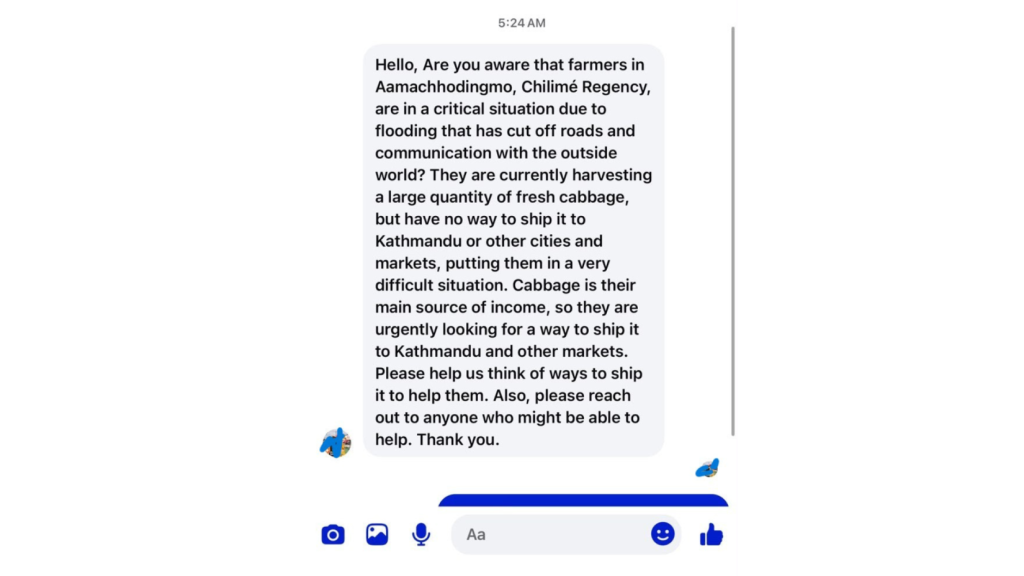
Then a message arrived in the inbox of the UN Nepal Facebook page.
Someone had seen the farmers’ produce beginning to rot and wrote to ask if the UN could help.
The communications officer who read it did not let it sit. The message went, one by one, to Resident Coordinator Lila Pieters Yahia, the UN Disaster Assessment and Coordination (UNDAC) team and the humanitarian team. A note from the public had become a question for the whole system.
The Resident Coordinator picked it up and carried it. She reached out to the private sector, local partners and colleagues across the UN, asking what could be done.
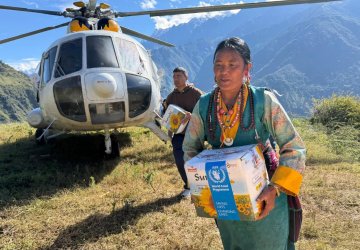
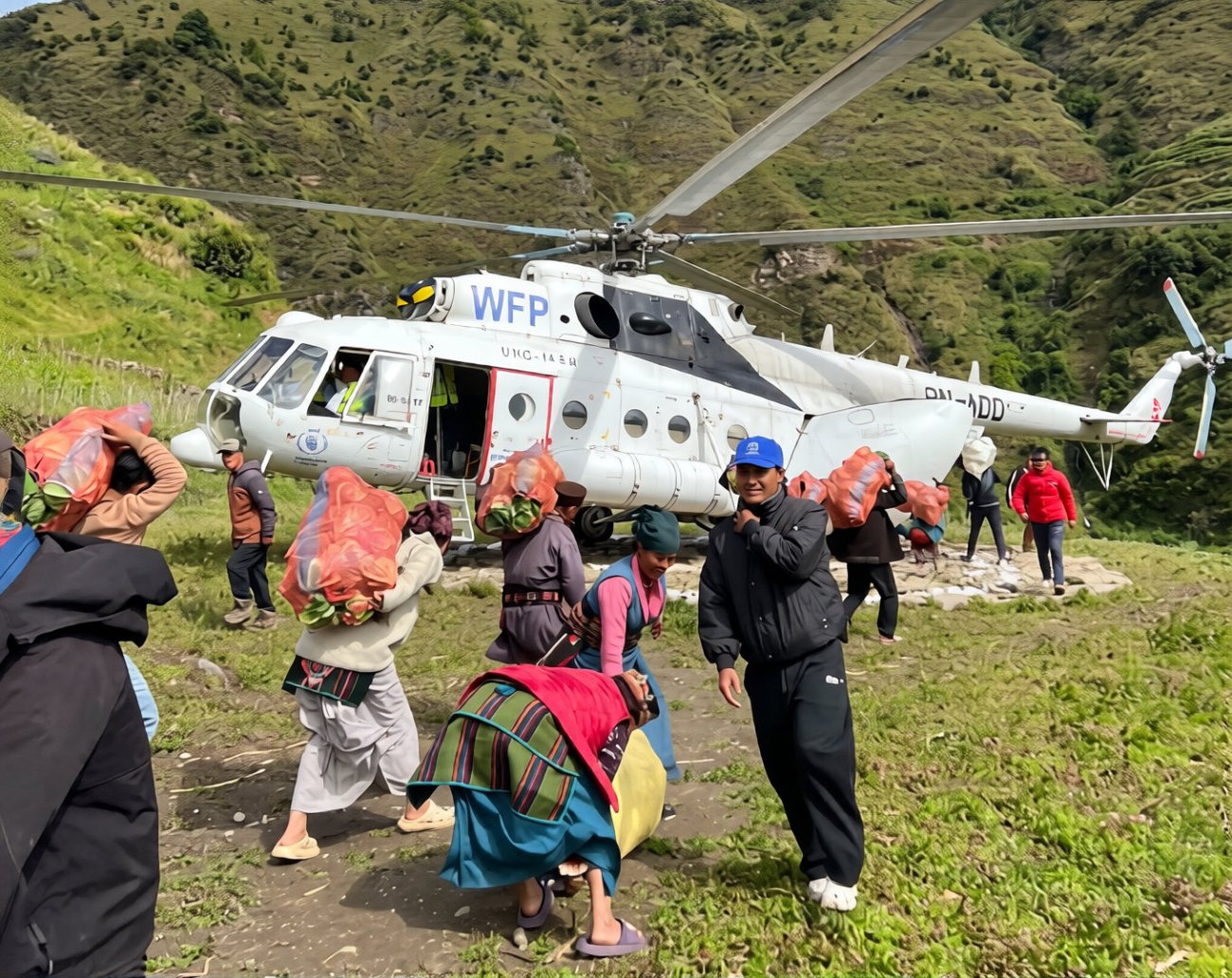
By then, the World Food Programme (WFP) was already flying relief into northern Rasuwa. The helicopters went up full and came back empty. The Resident Coordinator’s Office saw the gap and made a simple suggestion: let them come back carrying cabbage.
There was one problem. Aamachhodingmo had no helipad. So WFP teams helped build one, set out procedures and trained local teams to load produce safely.
Through all of it, the Resident Coordinator kept Aamachhodingmo on the agenda. In coordination meetings, with partners, in every room she entered, she spoke of the farmers who had lost not their homes but their way to market. Repetition is not glamorous. In a crisis, it is how things move.
On 9 October, working with local authorities and farmers’ cooperatives, WFP began flying produce from Gre to Bidur in Nuwakot: about 8,000 kilogrammes of cabbage and potatoes, finally in the markets they were grown for.
It is a start, not a solution. Much of the harvest – as many as 700 tons – still waits, and lasting recovery depends on rebuilding the Bailey bridge at Syaphrubesi. Until then, people cross the river by tuin, a temporary cable crossing.
On World Food Day, Aamachhodingmo is a reminder that a food system is more than fields and plates. It is also the connections between them, and the people who keep them open.
But a message that could have been lost in an inbox reached the right people, and they did not let it go.
They say the way to a person's heart is through the plate. For Aamachhodingmo, the way to the people’s heart and the plate ran through the sky.
This story was originally published by the UN team in Nepal. Please visit the UN team's website for more information about the UN's work in Nepal.





Latest news and updates