When Electricity Reaches the Farm, What Happens to Nature?
Written by Denis Subbotnitskiy, Sustainable Development Officer (Energy and SDG Acceleration), and Poorti Sapatnekar, Sustainable Development Officer (Climate, Environment, and Food Systems), at the UN Development Coordination Office.
It is a truth universally acknowledged that when clean energy replaces fossil fuels, it benefits people and the planet. But here is a paradox: across the world, when farms use clean energy, they can put additional pressure on water and land.
Why is this?
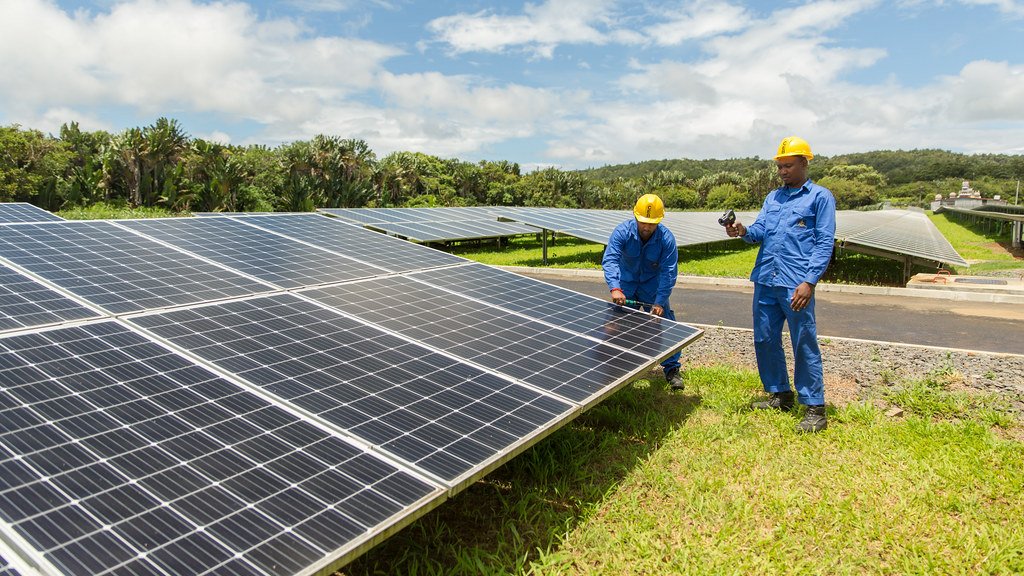
Consider a farmer replacing a diesel irrigation pump with a solar-powered one. With diesel, every litre costs money, which limits acting as a built-in brake on how much groundwater the farmer extracts. But once a solar pump is installed, sunlight carries no cost, so water becomes practically free to pump. Now the farmer has every reason to boost their income: switching to water-thirsty cash crops, adding an extra dry-season harvest in the year or expanding the farm size. The result: a financial incentive to strain the groundwater source to its limits.
This is not a problem limited to groundwater. Electricity can help farmers get more value from their harvests by powering milling, processing or refrigeration. Less goes to waste, and farmers can earn more from the land they already farm. But the same higher returns can also make it profitable to clear nearby forests, savannahs or wetlands where they are unprotected.
Most new farm electrification will be clean: renewables are on track to become the world’s largest source of electricity in 2026, and more than 90 per cent of new capacity costs less than is delivered below the cost of new fossil fuel plants. Whether this electricity eases or intensifies pressure on nature depends on two linked decisions.
First, where is the power for farming and food processing being extended: to established farmland and markets, or to the edges of forests and already stressed groundwater sources? Second, what are the incentives and safeguards governing how it is used?
Location and incentives decide
These questions are central to the 17th meeting of the Conference of Parties to the global biodiversity convention (CBD COP17), where governments meeting in Yerevan from 19 to 30 October are conducting the first global review of progress on the Kunming-Montreal Global Biodiversity Framework (GBF).
Adopted in 2022 by 196 countries, the framework aims to halt and reverse biodiversity loss to put nature on a path to recovery by 2030, with the ultimate vision of humanity "living in harmony with nature" by 2050.
Most countries have formulated domestic plans—National Biodiversity Strategies and Action Plans (NBSAPs)—to implement the framework. In their NBSAPs, many countries recognise that agriculture is a key entry point for action on biodiversity: in a Food and Agriculture Organization (FAO) analysis of 78 NBSAPs, 36 per cent of all planned actions are related to agrifood systems.
Yet electricity is now reaching those same farming areas at scale: in Africa alone, Mission 300 aims to connect 300 million people to electricity by 2030, with more than 50 million connected by June 2026. Insufficient refrigeration was estimated to cause the loss of 526 million tonnes of food produced in 2017—12 per cent of global production. But as a UN Environment Programme (UNEP)-supported Centre of Excellence in Rwanda demonstrates, when refrigerated storage and transport are placed where losses are highest, using efficient equipment and low-impact refrigerants, these losses can be partly recovered. The result is: more food and income without more land.
The evidence shows that location and incentives make the difference in balancing the significant benefits of electrification with the risks it poses to nature. In Brazil, a study published this year found that rural electrification between 1960 and 2000 raised crop yields and led farmers to shift from extensive cattle grazing to cropping, which needs far less land. Agricultural land use fell and more native vegetation was protected.
In Gujarat, India, farmers with solar pumps connected to the grid can sell the power they do not use, giving them a financial reason to save power—and potentially water. In a district with plentiful groundwater, participating farmers used around 550–600 millimetres less irrigation water a season than similar farmers, a recent study found. Where groundwater was already scarce, it made no real difference: farmers were limited by what their wells could supply, not the cost of pumping.
Same technology, same incentive, different groundwater, different result: incentives need to be designed with local conditions in mind. Where they cannot do the job alone, other tools are needed, such as water monitoring and usage rules. The aim is to reward value creation, not resource depletion.
Separate plans, mixed signals
NBSAPs alone cannot settle where power goes or what it rewards. Most countries already have national energy plans and broader development strategies. In Africa, more than 30 countries have also launched Mission 300 National Energy Compacts, setting out reforms and investments to expand access. Alongside these sit other climate and environment plans, including land degradation targets, national climate plans (NDCs) under the Paris Agreement, national adaptation plans and food system transformation strategies.
All shape the same rural areas but are usually prepared separately by different ministries, yet each depends on the others. NBSAPs cannot deliver their agrifood actions while ignoring how electricity changes farming, and investments to power farms lose value if the groundwater sources and soils they rely on degrade. The Global Biodiversity Framework’s targets on sustainable agriculture, collective planning and harmful subsidies already offer a shared basis.
Coordinating these plans and their implementation can reveal where energy investments support shared priorities, where incentives conflict and which institutions need to act together.
The UN system’s role
Through four priority actions, UN Resident Coordinators and UN Country Teams are supporting governments by:
- Aligning policies: convening energy, agriculture, water, environment and finance institutions so that the incentives they set, from electricity prices to farm subsidies, encourage farmers to use water and land sustainably.
- Preparing projects for funding: strengthening electrification plans with data on food losses, groundwater stress and biodiversity-sensitive areas, using platforms such as the UN Biodiversity Lab, with safeguards established from the outset.
- Building partnerships for financing: bringing development banks, local lenders and businesses together on terms that farmers, including smallholders and women-led enterprises, can access.
- Strengthening local capacity: helping local authorities and farmer organizations manage equipment and monitor water use and ecosystems.
Joint UN efforts already connect energy, food systems and finance, as well as the various national plans and ministries behind them. In Zimbabwe, a Renewable Energy Fund backed by the UN Joint SDG Fund and Old Mutual, a private investor, is financing solar power for a dairy processor that keeps milk cold from farm to factory, supporting 480 small-scale farmers. In Kenya, the UN Development Programme (UNDP) and UN Capital Development Fund (UNCDF) are supporting a programme to deploy 1,000 solar-powered cold storage units, aiming to benefit 60,000 smallholders.
Both bring together government, the UN and private partners, and raise the value of food already produced; the next step is to pair such finance with careful checks on where investments go, and water and land safeguards.
Rural electrification has been one of the clear development successes of recent decades, and remains a priority. But every transformation has trade-offs, and those created by cheap power on the farm will not resolve themselves through markets alone. Policies and institutions decide whether new electricity spares land and water or consumes them.
When the biodiversity conference concludes, the real work of turning ambition into action begins. The UN system will support countries every step of the way—aligning policies, data and finance so that each new electricity connection also delivers food preserved, incomes earned, water used responsibly and ecosystems protected.





Latest news and updates