From Risk to Opportunity: De-risking Namibia’s Green Transition
Hopolang Phororo, UN Resident Coordinator in Namibia, and Eunice Ajambo, Economist, UN Namibia, reflect on how the country is harnessing biomass and green hydrogen to build an inclusive, resilient and sustainable future.
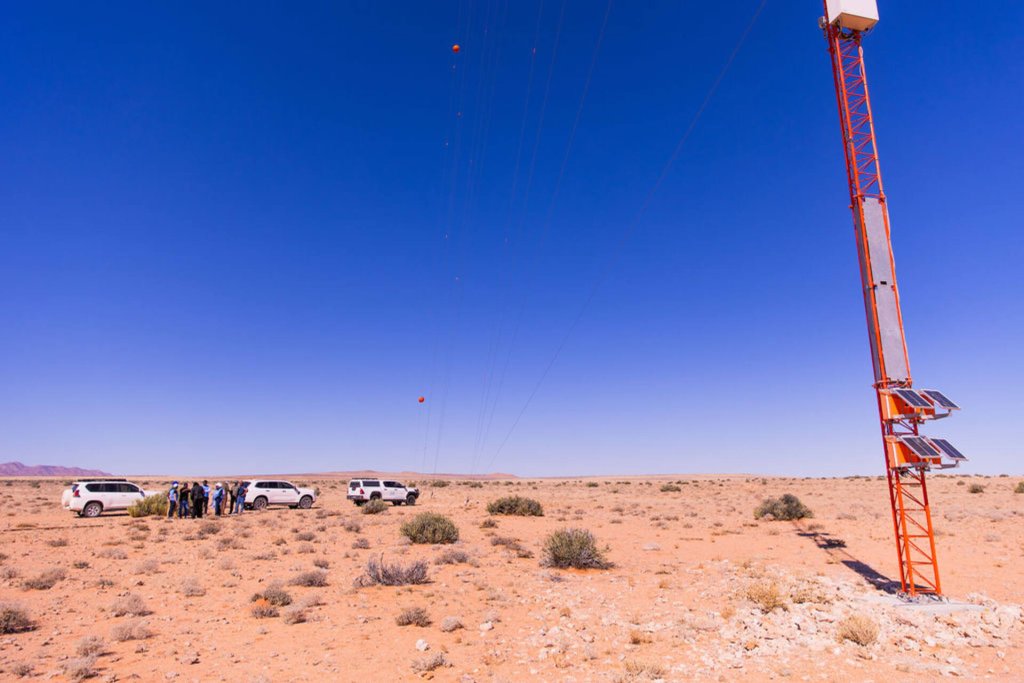
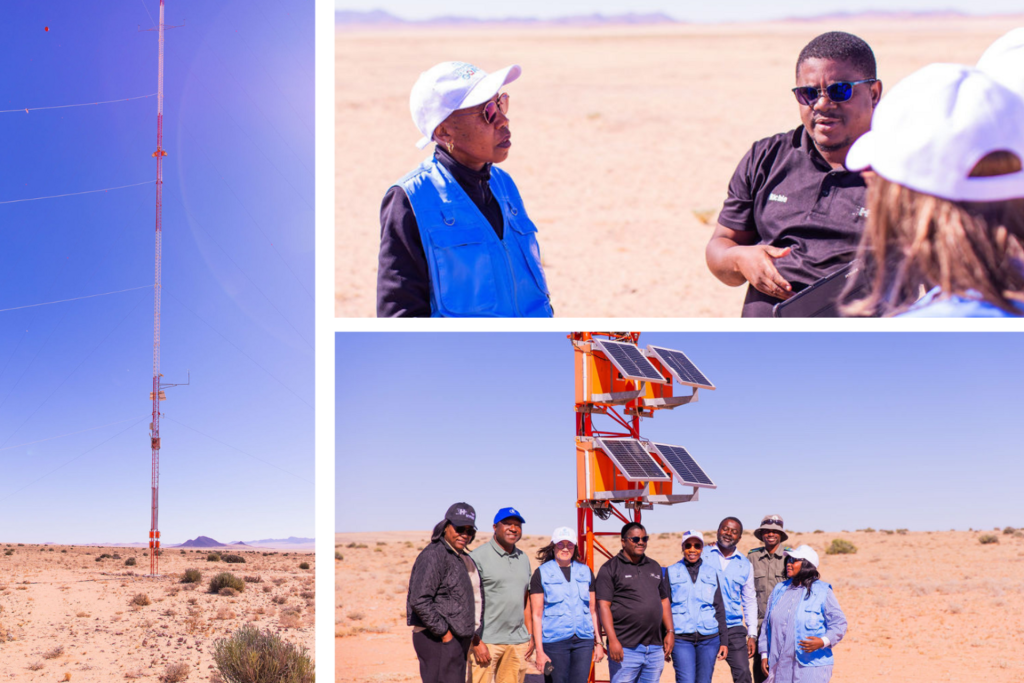
Recent visits by UN Namibia to the Dâures Green Hydrogen Village in Erongo Region and the Hyphen Hydrogen Energy Project in the Kharas Region offered a powerful glimpse into Namibia’s green future. Both initiatives point to a common ambition: leveraging the country’s abundant renewable resources to drive inclusive growth, create jobs and strengthen resilience. The mission revealed not only the momentum building around these emerging industries, but also the critical choices that will determine whether the green transition delivers broad-based development benefits for Namibians, for the continent and for the world.
What stood out most was that successful green industrialisation depends as much on people, governance and inclusion as it does on technology and capital. Realising the promise of renewable energy requires proactive effort to manage risks and ensure communities are active participants in transformation, not passive observers.
A country ready to lead
Namibia is uniquely positioned to lead in green industrialisation. With some of the world’s best solar and wind resources and vast biomass potential from encroacher bush, eight large-scale green hydrogen projects are now in development, representing an estimated N$390 billion (approximately US$24 billion) in investment potential as confirmed at the 2nd Namibia–EU Business Forum in May 2026. Namibia is also among the countries eligible to access low-cost concessional financing through the Climate Investment Funds' Industry Decarbonisation Programme, further strengthening the long-term investment case for the sector.
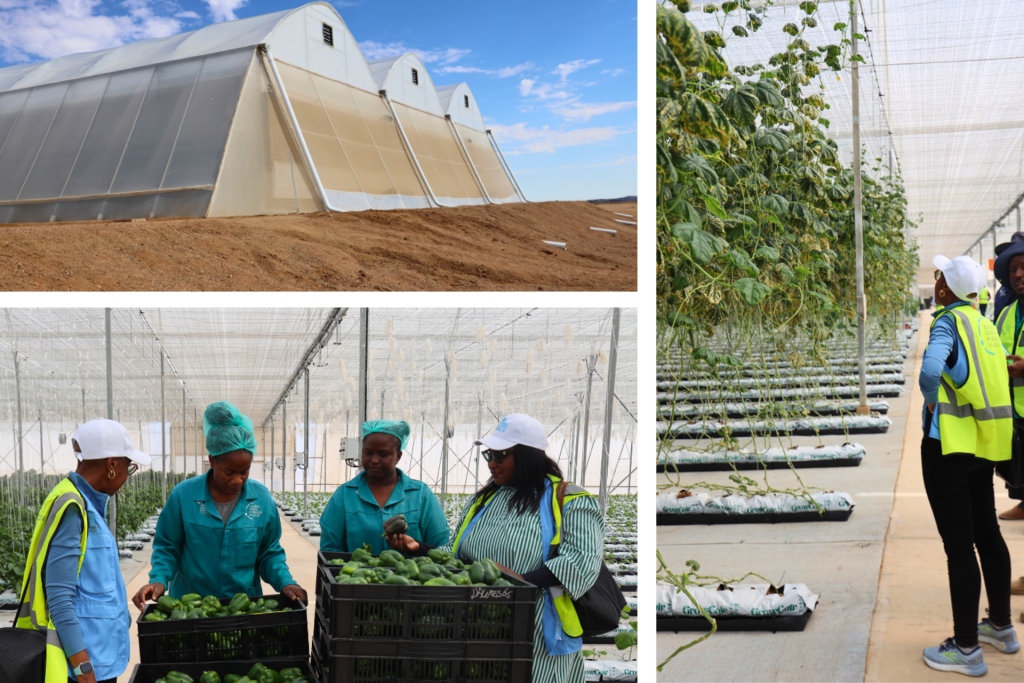
The field mission highlighted two distinct but complementary pathways. The Dâures Green Hydrogen Village is a pilot and innovation platform, integrating hydrogen production with agriculture, food security and community livelihoods on a 15,000-hectare site in Erongo. Hyphen Hydrogen Energy illustrates the industrial scale that is achievable: a project with total investment exceeding N$10 billion (approximately US$620 million), targeting one million tonnes of green ammonia annually by 2028, with the potential to generate 15,000 construction jobs and 3,000 permanent positions — more than 90 per cent expected to go to Namibians.
Turning inclusion into practice
At Dâures, the principle of Leave No One Behind is being translated into concrete structures. The Daure Daman Traditional Authority and the Tsiseb Conservancy hold a 10 per cent ownership stake, ensuring communities share in decision-making and returns. The project has employed over 160 Namibians, including more than 30 from the local constituency, and directed 30 per cent of construction contracts to local small- and medium-sized enterprises. A training programme developed with the UN Industrial Development Organization (UNIDO) under its Accelerate-to-Demonstrate (A2D) Facility, supported by a US$5 million UK-funded grant, builds skills in electrolyser maintenance, ammonia synthesis, fertiliser production and agri-systems, with priority places for young people from marginalised communities. The project also holds a Memorandum of Understanding with the World Food Programme (WFP) for potential offtake of agricultural produce and fertiliser, anchoring energy production within local food security systems.
These experiences reinforce a clear lesson: a just transition requires deliberate investment in people, skills and participation — enabling women, young people and vulnerable groups to become active contributors to emerging green value chains, not bystanders.
Biomass: From environmental challenge to economic opportunity
Namibia’s biomass sector offers a parallel opportunity. Encroacher bush, long viewed as a burden on productive land, is increasingly recognised as a resource that can support industrial development, renewable energy, land restoration and rural livelihoods. De-risking both hydrogen and biomass pathways simultaneously means that environmental stewardship, social inclusion and economic transformation can advance as a single, integrated agenda and not competing priorities.
De-risking as a development strategy
Realising Namibia’s green transition requires treating risk management as a development strategy in its own right — not a financial afterthought. New industries like green hydrogen and biomass need more than capital: they require governance frameworks, workforce readiness, community trust and fiscal structures that keep investment viable and equitable over time. De-risking, in this sense, means creating the social, institutional and environmental foundations that allow investment, innovation and inclusion to advance together. Addressing these factors early builds the legitimacy that sustains projects through market fluctuations and political cycles.
The role of the United Nations
The UN is not simply observing Namibia’s green transition; it is actively shaping it. At Dâures, UNIDO’s Accelerate-to-Demonstrate Facility is enabling the site to serve as a living laboratory for inclusive green development, connecting renewable energy with local enterprise, agriculture and community participation.
Across the broader transition, the Food and Agriculture Organization (FAO), International Labour Organization (ILO), UN Development Programme (UNDP) and UN Children's Fund (UNICEF), together with UN Women and WFP, are jointly implementing “Agri-Systems Transformation through Biomass Processing for Decent Job Creation and the Extension of Social Protection”. The initiative falls under the Global Accelerator on Jobs and Social Protection for Just Transitions, with funding from the UN Joint SDG Fund.
Results to date include the completion of accredited biomass harvesting and processing training by 295 young people (including 130 women), strengthening employability in green value chains; the adoption of an integrated policy framework and implementation plan for the transition from the informal to the formal economy, providing a foundation for more inclusive labour market participation; the application of Employment Impact Assessment methodologies to green hydrogen and agricultural investments, with the approach being institutionalised in public investment decision-making; and the use of the Skills for Trade and Economic Diversification (STED) methodology to inform Namibia’s Energy Sector Skills Strategy, helping align workforce development with the emerging green economy.
In parallel, the draft Global Accelerator National Roadmap and the third National Employment Policy have reached an advanced stage, positioning employment creation and social protection more centrally within Namibia’s macroeconomic and sectoral policy framework.
At the centre of this effort, the Resident Coordinator’s Office provides the convening platform and analytical foundation to bring together Government ministries, social partners, private sector and development partners under Namibia’s Sixth National Development Plan (NDP6), ensuring the green transition advances as a system-wide UN contribution: inclusive, coordinated and people-centred.
Looking ahead
The 2nd Namibia–EU Business Forum in May 2026 confirmed that international partners are already engaged: the EU has positioned itself as a central actor in Namibia’s green energy ecosystem, deploying capital, setting standards, catalysing investment and securing long-term offtake agreements, with EU–Namibia trade already supporting 47,000 Namibian jobs.
The challenge for Namibia — and the opportunity — is to combine the community-level strengths demonstrated at Dâures with the industrial scale that projects like Hyphen represent, ensuring transparency, participation and equitable benefit-sharing remain central throughout.
Namibia’s experience holds lessons for countries everywhere navigating the green transition. When risks are addressed early, communities are meaningfully engaged and benefits are shared broadly, the shift to renewable energy becomes more than an environmental imperative. It becomes a pathway to resilience, prosperity and sustainable development for all. The United Nations, convened by the Resident Coordinator’s Office, is committed to supporting Namibia on that journey.
Note:
All joint programmes of the Joint SDG Fund are led by UN Resident Coordinators and implemented by the agencies, funds and programmes of the United Nations development system. With sincere appreciation for the contributions from the European Union and Governments of Belgium, Denmark, Germany, Ireland, Italy, Luxembourg, Monaco, the Netherlands, Norway, Poland, Portugal, the Republic of Korea, the Kingdom of Saudi Arabia, Spain, Sweden, Switzerland and the Arab Gulf Programme for Development for a transformative movement towards achieving the SDGs by 2030.
This blog was originally published by the Joint SDG Fund. Please visit the UN team's website for more information about the UN's work in Namibia.





Latest news and updates