The Rio Trio: Why Environmental Conferences Matter for Global Stability and Prosperity
By Jaap van Hierden, UN Resident Coordinator in Mongolia; Françoise Jacob, UN Resident Coordinator in Armenia; and Babatunde A. Ahonsi, UN Resident Coordinator in Türkiye
This year, Mongolia, Armenia and Türkiye will take centre stage in the global effort to confront three of the defining environmental challenges of our time: desertification, biodiversity loss and climate change. Mongolia will host COP17 of the UN Convention to Combat Desertification in August; Armenia will host COP17 of the Convention on Biological Diversity in October; and Türkiye will host COP31 of the UN Framework Convention on Climate Change in November.
These gatherings are more than “just” environmental conferences. They are about economic transformation, sustainable development, social stability, and the future of multilateral cooperation. Amid geopolitical tension, rising food and energy insecurity, and widening inequality, environmental action is not a luxury. It is an essential investment in a more stable, just and prosperous world.
The geopolitical imperative for environmental action
The world is meeting in a moment of acute uncertainty. Conflicts in the Middle East are affecting energy supplies, food security and economic activity, with the heaviest burden falling on vulnerable countries and communities. Higher fuel and fertilizer prices threaten harvests, public budgets and household incomes. These shocks show how deeply environmental security is linked to economic resilience and peace.
This is precisely the moment to invest in sustainable development, not as a cost, but as a practical strategy for managing risk. Land restoration, clean energy, biodiversity protection and water security can reduce import dependence, strengthen food systems, create jobs and protect livelihoods. Delayed action will only raise future costs and deepen human suffering.
The Rio Trio conferences are therefore not simply about saving trees, protecting species or reducing emissions. The decisions made in Ulaanbaatar, Yerevan and Antalya will help determine whether countries can break cycles of vulnerability and build resilient economies that protect people’s rights and opportunities.
Many meetings, one moment
Although the three conferences are governed by separate conventions as outcomes of the 1992 Rio Earth Summit, the issues they address are inseparable. Climate change, biodiversity loss and land degradation are symptoms of the same unsustainable patterns of production and consumption. And they reinforce one another: drought accelerates land degradation; degraded land undermines biodiversity; biodiversity loss weakens ecosystems; and weakened ecosystems intensify climate impacts.
Our three countries show this clearly.
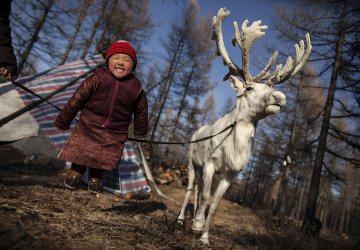
In Mongolia, increasing pressure on rangelands is driven by land degradation, biodiversity loss and climate vulnerability, all of which reinforce one another.
In Armenia, logging, overgrazing, agriculture and mining are eroding fragile forest ecosystems that rural communities depend on, with downstream effects on pollination and water purification.
In Türkiye, extreme heat has reduced greenhouse tomato yields while sharply increasing irrigation and energy demand, creating a vicious cycle of vulnerability.
These are not separate crises. They are one system under stress.
That is why governments, cities, civil society and companies should approach the Rio Trio as building blocks of one architecture for resilience, rather than as isolated diplomatic moments. Policy coherence is no longer optional; it is the only way to deliver results at the speed and scale required.
The UN Water Conference in December will bring these threads together, reminding us that water security underpins agriculture, public health, ecosystems and energy systems.
Together, these meetings offer countries a rare opportunity to align development planning, climate commitments, biodiversity strategies, land targets, financing approaches and digital infrastructure into a single coherent national narrative – one that delivers sustainable development and leaves no one behind.
Finance: the elephant in the room
The critical thread across all three Rio COPs is finance: not only how much is available, but also how coherently it is directed. Countries face a multi-trillion-dollar annual gap in achieving the Sustainable Development Goals while trying to deliver climate action, biodiversity protection, land restoration, food security, water resilience, and inclusive growth at the same time.
The task ahead is not simply to mobilise more resources, but to align fragmented sources of finance behind shared national goals. Domestic public finance should set direction through budgets, subsidies, tax policy, public investment and procurement. International public finance and vertical funds should reinforce that direction, while private capital can be mobilised through clearer pipelines, risk-sharing tools and predictable regulation. Philanthropy and blended finance can help prepare projects and absorb early-stage risks.
This matters because finance follows confidence. Integrated national pathways across energy, food, land, water, urban and digital systems can reduce policy uncertainty, clarify trade-offs and make investment opportunities more bankable.
From Mongolia’s need for investment in drought-resilient agriculture, to Armenia’s efforts to mobilise biodiversity finance and nature-positive value chains, to Türkiye’s ambition to unlock climate finance for green industrialisation and resilient infrastructure, the lesson is the same: integrated plans lower risk, attract investment and accelerate delivery.
The Rio Trio must therefore help shift the conversation from pledges to pipelines, and from isolated funding windows to financing strategies that bring all actors to the same table.
Helping governments connect the dots
This is the work the UN is supporting in over 160 countries around the world. As UN Resident Coordinators, our role is to help governments make the most of the opportunities at the global stage and mobilise the full breadth of the UN system to deliver at the national level. We are helping link national climate plans (NDCs and NAPs), National Biodiversity Strategies and Action Plans, land degradation neutrality targets, financing strategies and investment pipelines. We are helping bring ministries, civil society, the private sector and international financial institutions around clearer choices and shared priorities.
In Mongolia, preparations for COP17 on desertification are being used to build a lasting development legacy, long after delegates have left Ulaanbaatar. The discussions around land restoration, sustainable rangeland management and drought resilience are helping connect global environmental commitments with national development priorities. As pressure on rangelands grows, sustainable land management, ecosystem restoration, and the protection of vulnerable landscapes offer opportunities to strengthen biodiversity, resilience and long-term economic prospects, including nature-based tourism.
Meanwhile, UN Armenia and partners are advancing preparations for COP17 on biodiversity in November 2026 through policy advocacy that demonstrates the inextricable links between biodiversity and climate and engages with all actors in society. In particular, intentionally bridging media and experts in the discussion is paving the way for a shared space where scientific expertise meets responsible storytelling, as an essential step towards unlocking and aligning financing. The COP17 Media School aims to evolve into a flagship initiative, a forward-looking model: a scalable and ready-to-use initiative that can be adapted beyond Armenia to support high-quality media coverage of future COPs globally.

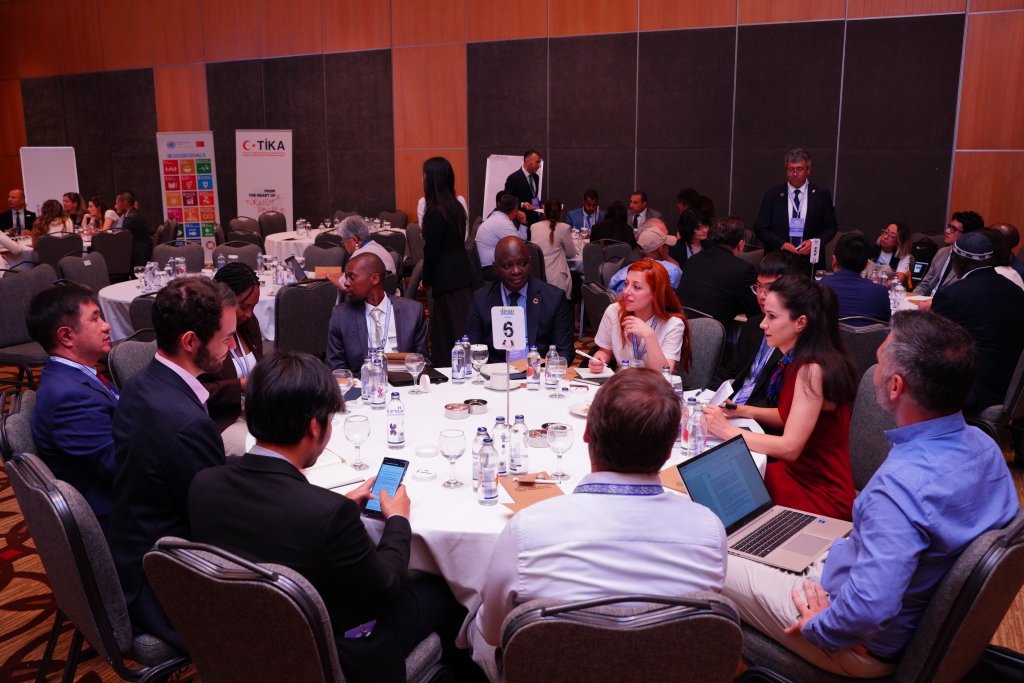
Through its COP31 Engagement Strategy, the UN in Türkiye has convened a broad coalition of government, business, academia and young people focused on the circular economy, industrial decarbonisation, food systems, water, urban resilience and a just transition. This is helping turn dialogue into practical partnerships and scalable solutions, while ensuring that diverse voices help shape tomorrow’s decisions.
Policy dialogues with the Turkish Cooperation and Coordination Agency (TİKA) and the COP31 High-Level Climate Champion, with support from the United Nations Office for South-South Cooperation, are channelling UN support towards a Türkiye-anchored South-South and Triangular Cooperation Climate Initiative that will connect developing countries with practical solutions, expertise, technologies and finance. This matters particularly for Least Developed Countries and Small Island Developing States and is precisely the kind of joined-up approach the Rio Trio calls for: linking climate action with nature, land, development cooperation and investment.
The opportunity is strategic and immediate: the Rio Trio can help countries move from pledges to pipelines, from parallel processes to joined-up action, and from short-term crisis response to long-term resilience. For host countries, success should ultimately be measured not by the quality of the conference alone, but by the partnerships, investments and policy changes that endure long after it concludes.
One chance for collective action
The stakes could not be higher. If we continue to treat land, nature, climate, water, cities and finance as separate agendas, we will continue to chase crises as they multiply. But if we connect them – politically, financially and practically – we can build economies that are more resilient, societies that are more secure and a planet that can sustain future generations.
This is the promise of the Rio Trio. Not three conferences. One chance to choose coherence over fragmentation, investment over delay, and collective security over shared vulnerability.
The world should take it.
Please visit each UN team's website for more information about the UN's work in Mongolia, Armenia, and Türkiye.





Latest news and updates