In Jordan, Women’s Empowerment Is Not a Slogan: It Is Policy
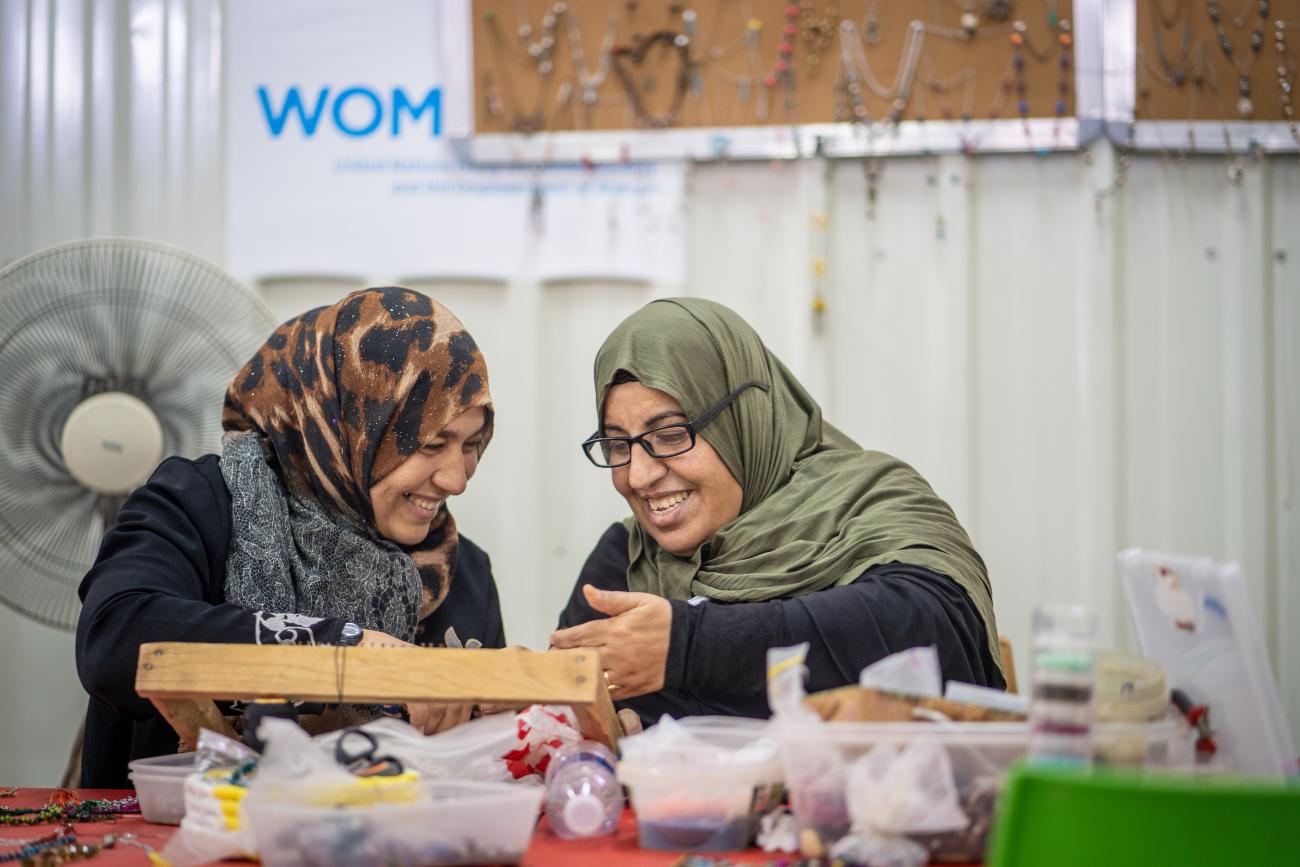
Sheri Ritsema-Anderson, UN Resident Coordinator in Jordan, reflects on the progress, opportunities and challenges in achieving gender equality as Jordan implements its Economic Modernization Vision.
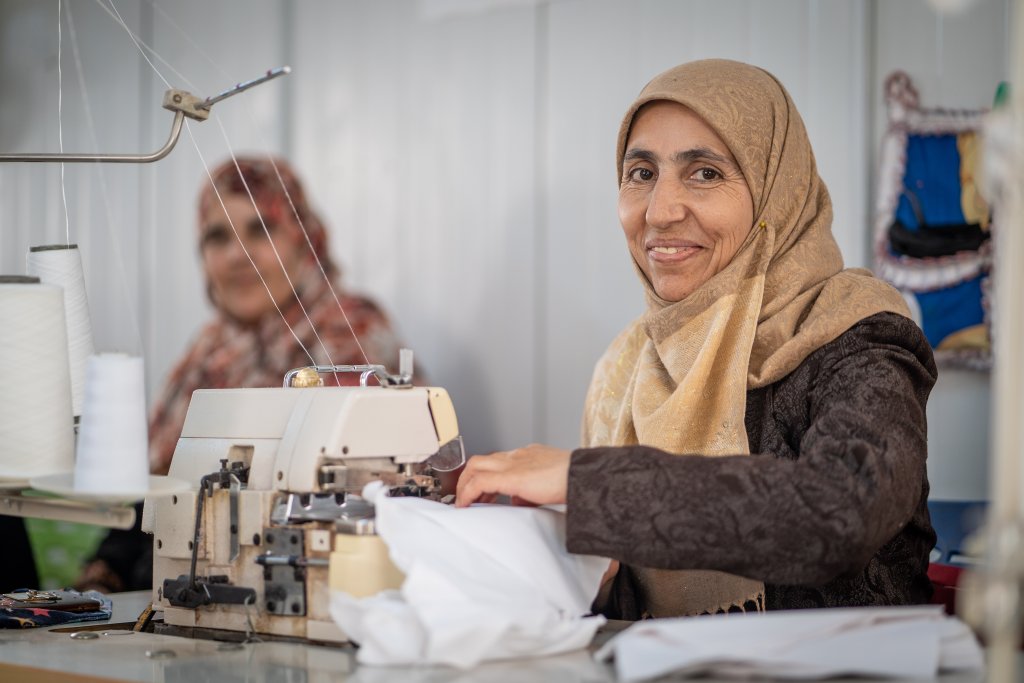
Some months ago, I travelled south of Amman to the industrial areas of Sahab and Al-Muwaqqar. It was an ordinary working day: women and men arriving for their shifts, clocking into factories, getting on with their jobs. Yet, as I stood there watching, I was struck by the quiet transformation taking place.
These companies operating in Sahab and Al-Muwaqqar have signed the Women’s Empowerment Principles, developed with support from UN Women and the UN Global Compact. These principles provide businesses with practical guidance on advancing gender equality, but their impacts go far beyond policy documents or certifications on the wall.
What stayed with me were the conversations. Female and male managers and business owners spoke of fairer hiring, clearer advancement paths and a culture where speaking up is possible. These were not abstract concepts, but daily realities shaped by people committed to change.
I left those factories thinking: this is what progress looks like when it is grounded in genuine commitment and driven by the people it is meant to serve.
A different kind of story
In many parts of the world, there is troubling pushback against women’s equality. This year’s International Women’s Day theme: “Rights. Justice. Action. For all women and girls,” feels not triumphant but urgent.
In Jordan, I do not see this pushback. I see something else: a Government making women’s empowerment a central pillar of national development, not a donor-driven checkbox. Jordan’s Economic Modernization Vision, launched in 2022, aims to double female labour force participation from 14 per cent, one of the lowest rates in the world, to 28 per cent by 2033. It reflects a clear-eyed understanding that a modern economy cannot leave half the population on the sidelines.
This matters enormously for the UN. When we support the Government on women’s equality, we are not pushing against the current. We are accelerating the implementation of Jordan’s own priorities.
One UN, many contributions
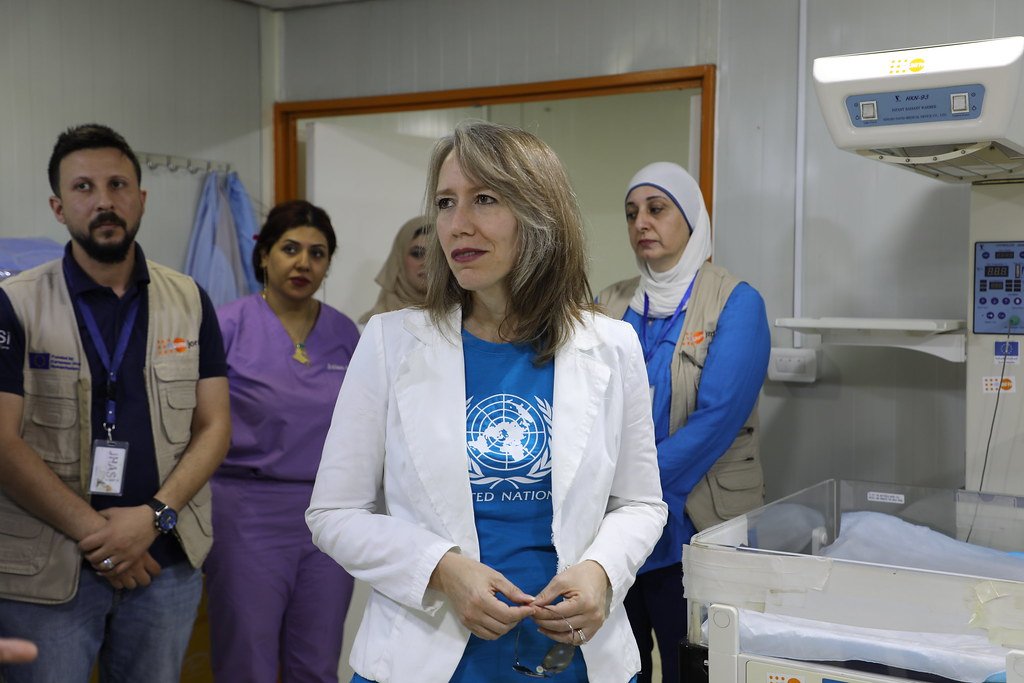
As the Resident Coordinator, it is both a duty and a source of pride to see the UN act as one. The UN team in Jordan is unified in prioritising women’s empowerment, reflecting the Secretary-General’s commitment to gender parity across the UN system over the past nine years.
Under the umbrella of my Office, UN entities are pooling together expertise and resources, showing clearly that gender equality is not the work of any single entity, but driven by the strength of the collective. The International Labour Organization (ILO) supported the introduction of 13 reforms to legal frameworks on gender equality in the labour market, including flexible work, pay equity and paternity leave, while running work-based learning programmes in which over half of trainees are women.
The UN Children’s Fund (UNICEF)’s “Learning to Earning” programme equips young women with vocational and entrepreneurship skills. In remote areas, this gives communities access to digital payments and creates livelihoods, reducing pressure to migrate to cities in search of jobs. The UN Population Fund (UNFPA) addresses some of the most fundamental rights: sexual and reproductive health, gender-based violence prevention and adolescent girls’ agency. Through community youth centres and health clinics serving both Jordanian and Syrian refugee women, UNFPA addresses sociocultural barriers and health gaps that hold women back long before they reach the labour market. The UN Development Programme (UNDP) strengthens the governance and data systems that make all of this sustainable.
These are not parallel programmes in silos. When the ILO reforms a labour law, UN Women supports businesses to implement it. When UNICEF reaches a young woman with skills training, UNFPA has often already addressed the barriers that would have stopped her from showing up. That coherence is the result of sustained investment in how the UN operates together.
The private sector as a partner, not an afterthought
Which brings me back to those factories. By 2025, with UN support, 256 companies in Jordan had adopted the Women’s Empowerment Principles, representing over 100,000 employees. They received guidance on fair hiring, inclusive marketing and preventing harassment. Signatories recruited over 5,000 women in just one year – 56 per cent of all their new recruits. Women’s representation in supervisory roles rose to 32 per cent and to 48 per cent on executive boards.
The visit to Sahab and Al-Muwaqqar showed me that the impact goes deeper than numbers. The Principles create shared language, a practical roadmap and a community of peers advancing women’s equality. For small and medium companies lacking human resources departments or diversity teams, they provide hands-on guidance to meet them where they are. The Jordan Chamber of Commerce, the Chamber of Industry and the Amman Stock Exchange joining this network signal that businesses see women’s empowerment as an opportunity, not a cost.
Rights and laws are the foundation
Sustainable progress requires more than employer goodwill. It needs a legal and policy environment that enables participation in all aspects of public life.
In 2024, Jordan made a historic advance in political representation: women won 19.5 per cent of parliamentary seats, surpassing its previous level of 13.8 per cent and the regional average. This followed the electoral and political party reforms of 2022 and sustained outreach efforts by national institutions, civil society and the UN. A national voter awareness campaign, with UN support, reached over five million people across the Kingdom.
On the economic front, the Prime Minister’s 2025 Budget Circular requires Government agencies to apply a gender-equality lens to their budgets and to prioritise programmes for women and girls. The UN supported this work – refining circulars, developing tools, collaborating with nine pilot ministries to include gender equality indicators in their budgets for the first time. This is not just driving progress through projects, but by shifting entire systems for present and future generations.
Still, challenges remain. Structural barriers – female labour force participation, accessible childcare, safe transport, social norms and legal gaps – require sustained, multi-sectoral effort.
The way forward: Scale, systems and solidarity
The UN’s role in Jordan is not to set the agenda – Jordan has done that itself. Our role is to accelerate implementation, unlock scale and build evidence for smarter policy that leaves no one behind.
Progress is happening, from the factories in Sahab and Al-Muwaqqar to the corridors of power, where strong partnerships between the UN and national counterparts are translating the Government’s vision into an impact that people are realising on the ground. I am committed to ensuring the UN – all of it, together – continues to accompany Jordan as it makes good on its ambition for all women and girls.
This blog was written by Sheri Ritsema-Anderson, UN Resident Coordinator in Jordan. Please visit the UN team's website for more information about the UN's work in Jordan.





Latest news and updates