Families in Jamaica Rebuild from the Impact of Hurricane Melissa
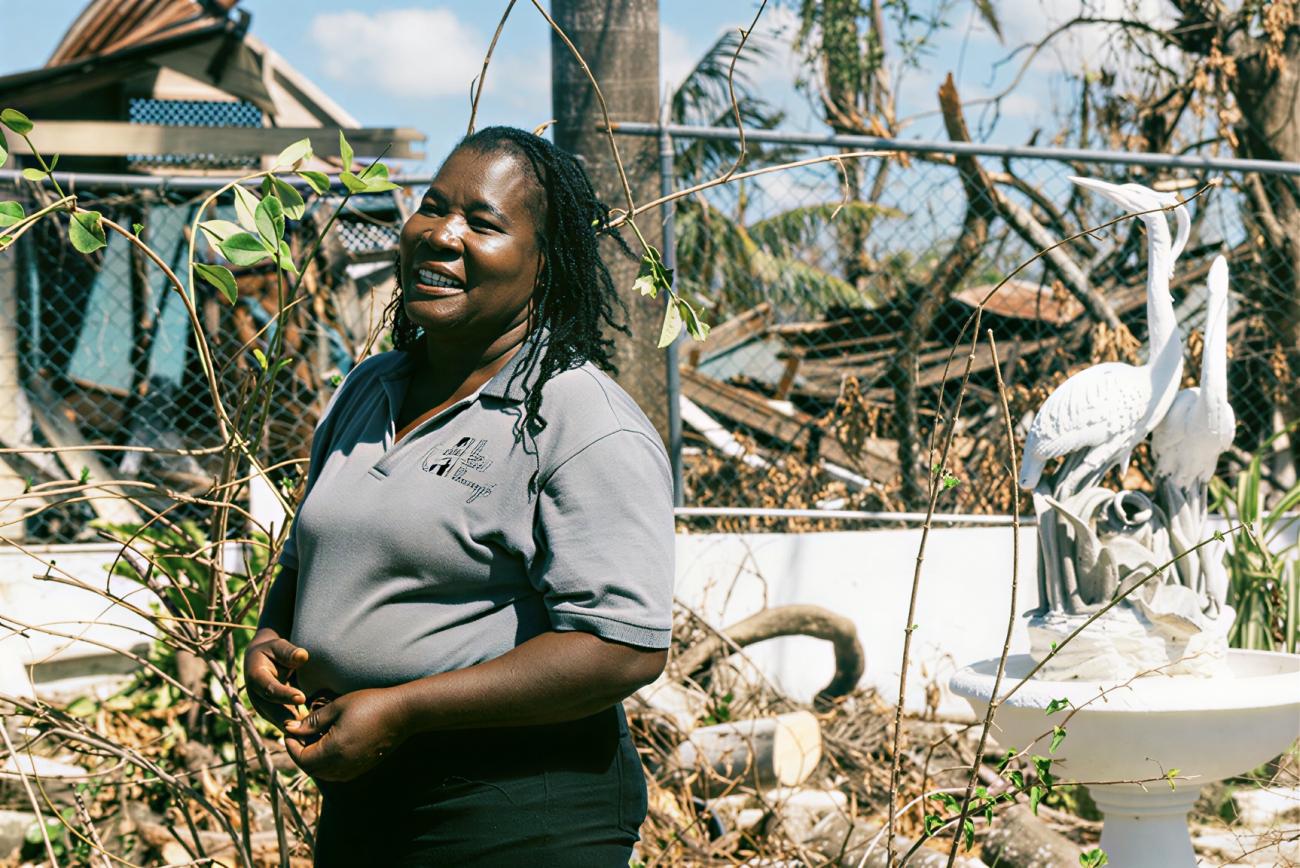
As Westmoreland’s midday sun blazes, Judene Brown looks towards the horizon with hope. Hurricane Melissa has passed, and as time goes on, she sees the promise of renewal.
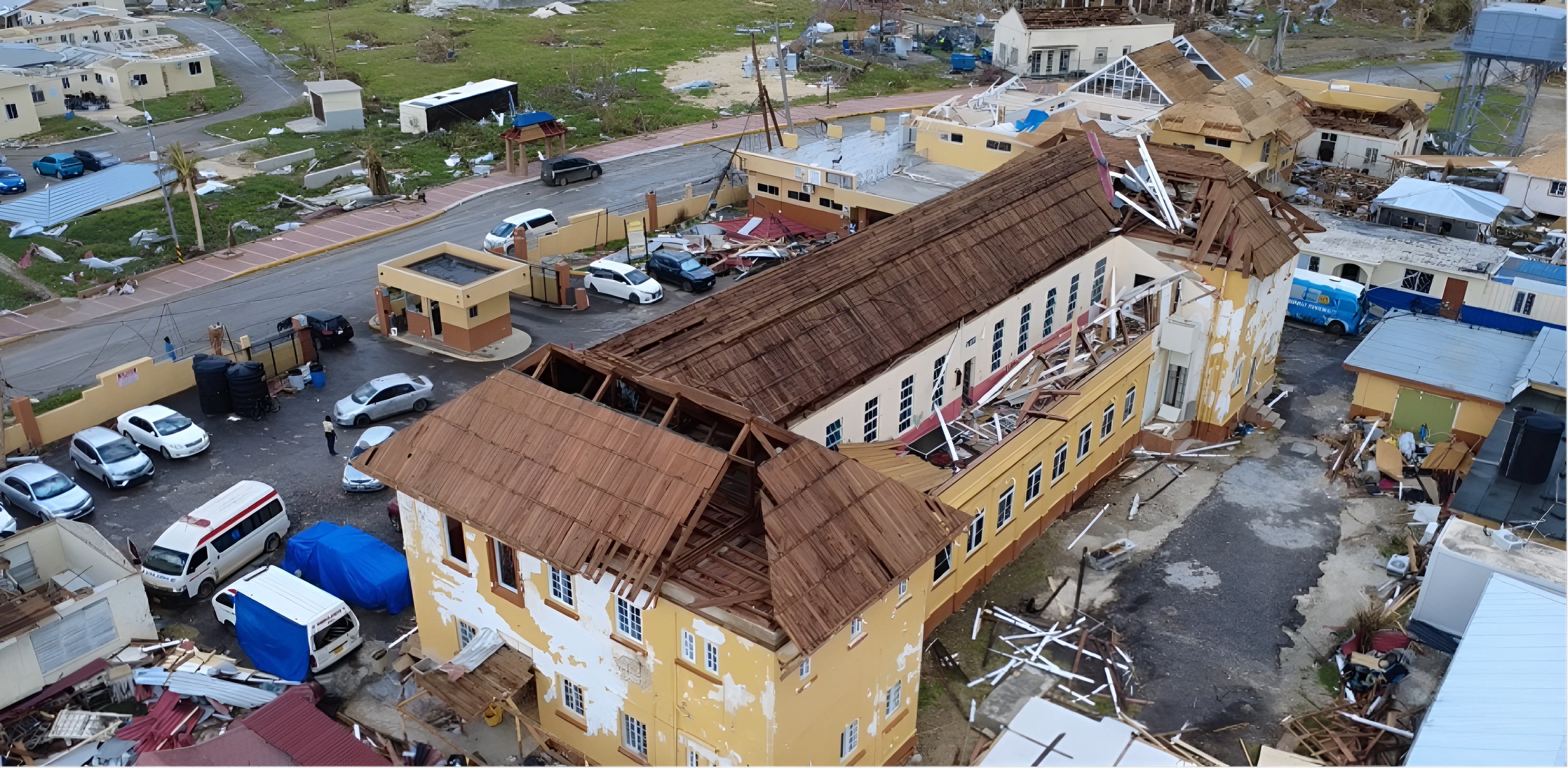
Melissa upended lives and livelihoods when it struck seven parishes in Jamaica’s western corridor in late October. But the spirit of community persisted even as parts of the country were flattened.
“Most of us were completely flooded out. We had nothing. But the fact that we were able to come together helped. And when we saw a truck, and then more trucks coming, the more the trucks came, the more we knew that support is coming,” Judene reflects.
Her family is among the thousands still displaced despite the round-the-clock efforts of more than 90 organizations. Under the leadership of the Resident Coordinator’s Office, UN agencies are supporting the Government, international and local humanitarian partners in bridging gaps in goods and services for affected communities.
“Coordination continues to be central to the relief efforts,” says the UN Resident Coordinator in Jamaica, Dennis Zulu, who has lauded the leadership of the Government, Jamaica Defence Force and the Office of Disaster Preparedness and Emergency Management (ODPEM). “Across all these efforts, the UN coordination system has worked with the ODPEM and relevant Ministries, ensuring that support is data-driven, needs-based and nationally led. This partnership remains vital to collective recovery.”
Jamaica’s collaboration in rebuilding perfectly conveys the message that if you want to go fast, you should go alone; if you want to go far, go together.
Partnerships reflect Westmoreland’s community spirit
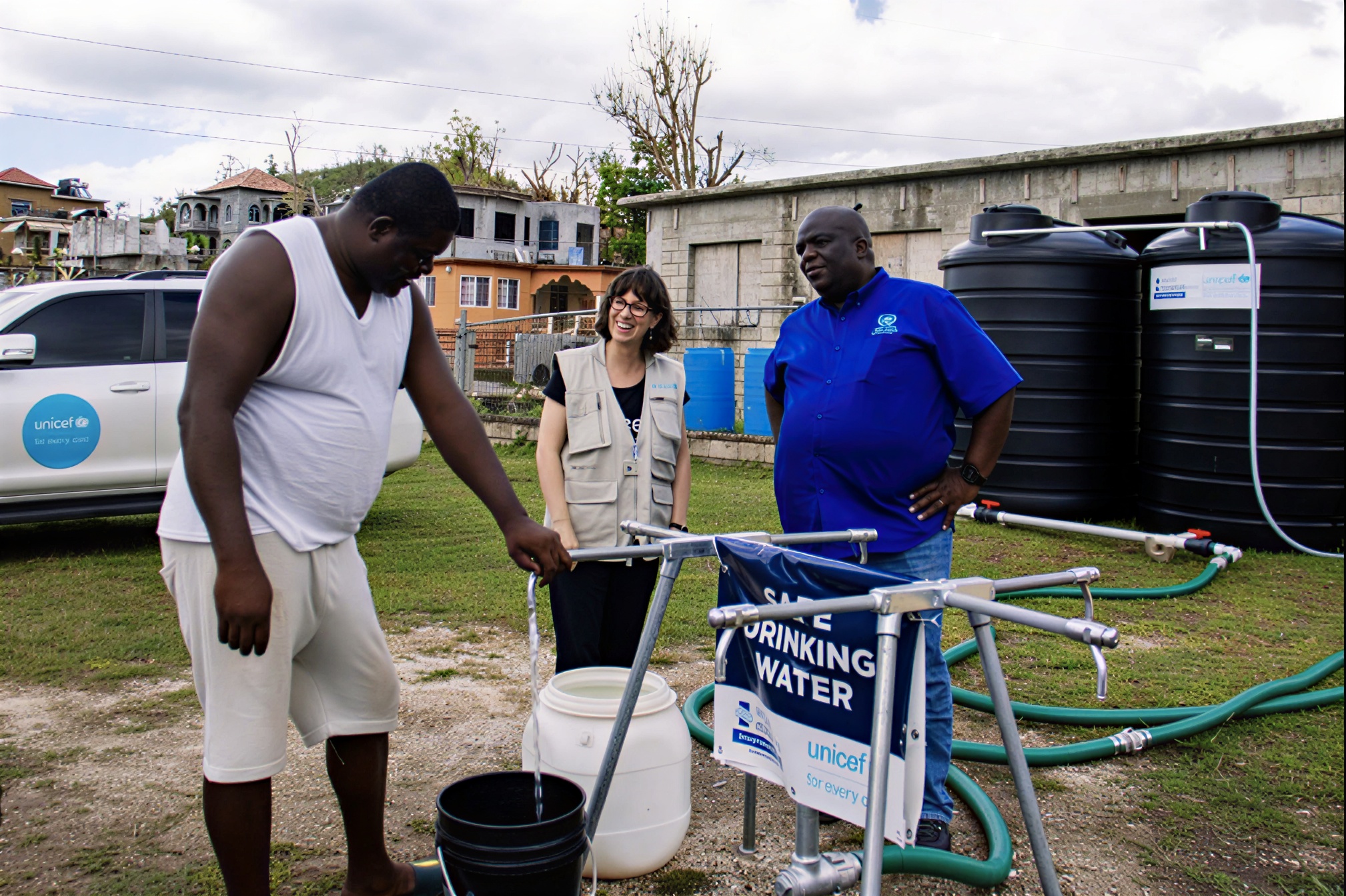
Judene and her sister have arrived early at a distribution point, where World Central Kitchen supports the community with daily hot lunches, and the UN Children's Fund (UNICEF), in collaboration with Water Mission, provides clean drinking water.
Access to water became essential for families trying to regain normalcy after Hurricane Melissa. UNICEF and partners have reached over 75,000 people with water and sanitation supplies and, for safe storage, provided 2,500 jerrycans and 6,000 buckets.
Thanks to coordinated efforts with the Government, more than 90 per cent of national water systems are back online. “Our kids no longer worry about food. But now we need roofs. I won’t stop until mothers like me, who are completely homeless, have a roof to secure and protect their children,” Judene says.
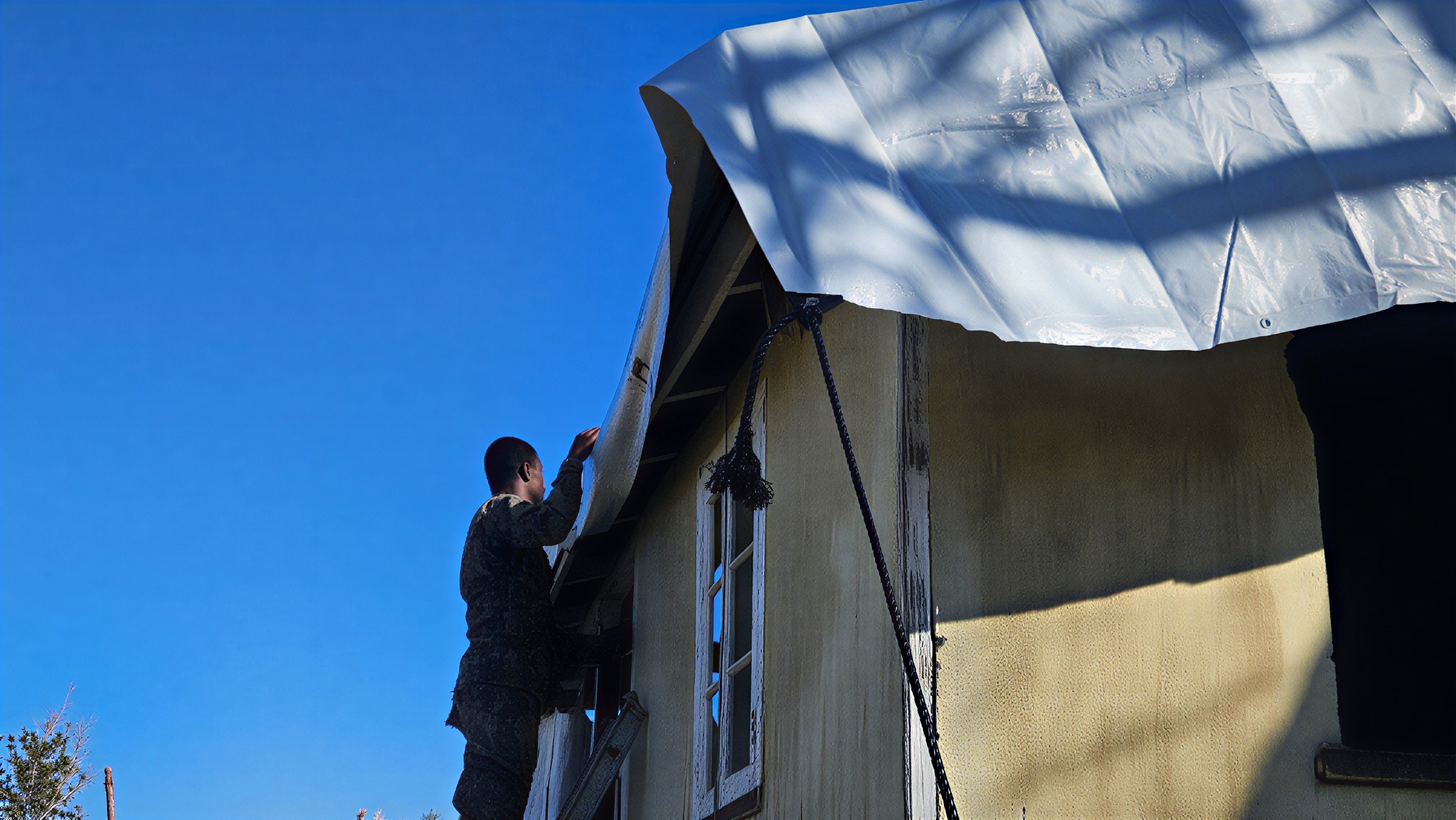
The International Organization for Migration (IOM) distributed over 14,000 tarpaulins to provide families with temporary protection, and 26 damaged health centres resumed services. But over 90,000 households are still displaced. IOM is therefore working side by side with partners to restore shelters and remove debris.
Reflecting Jamaica’s spirit of solidarity, the World Food Programme (WFP) has supported over 130,000 people with emergency food kits and is now transitioning to cash-based support, having reached over 27,000 people.
WFP has also leveraged its logistics and telecoms expertise by establishing nine mobile storage units and coordinating the processing of 85 shipments, totalling 2,235 metric tons of food and supplies, via a control tower co-managed with the Caribbean Disaster Emergency Management Agency.
And in partnership with the Emergency Telecommunications Sector, WFP restored connectivity at 65 sites, supporting over 24,000 people.
Health and protection for resilient recovery
Connectivity is especially important for the 336 health facilities that bore the brunt of Melissa’s fury. Together with the Government, regional health authorities, and NGOs, the Pan American Health Organization (PAHO) reinforced emergency repairs to affected facilities and hospitals, ensuring continuity of care even in the most devastated areas. Over 85 per cent of facilities have since had their services restored.
PAHO also partnered with the Ministry of Health and Wellness to coordinate 17 emergency medical teams, providing care through over 13,000 consultations, 365 admissions and 390 surgeries.
Access to healthcare was essential during the over 25 births that took place after Melissa—embodying resilience itself, but also a reminder that the most vulnerable are at risk of exploitation and abuse when disaster strikes.
Beyond immediate relief, UN Women, the UN Population Fund (UNFPA) and partners support the Government in protecting women, girls and other vulnerable groups. UNFPA conducted rapid needs assessments and strengthened gender-based violence services, ensuring continuity of essential sexual and reproductive healthcare and coordinating with partners for the distribution of dignity kits.
Behind the scenes, the UN Office for the Coordination of Humanitarian Affairs (UNOCHA) worked alongside ODPEM and partners to coordinate humanitarian efforts, bringing agencies and partners together around shared information and analysis, ensuring that support reached communities where it was needed most.
When UN, Government, local and NGO partners tap into their expertise, services are maintained, needs are addressed, and, above all, no one is left behind.
A path for the future
Clearing debris, supporting families with food and repairing health facilities are just the beginning. Recovery, Mr. Zulu says, will require everyone, the Government, UN agencies, the private sector, civil society and the communities themselves, working together. Transitioning from crisis to rebuilding is daunting, but hope endures.
Judene draws strength from her faith and the values passed down by her grandmother. She speaks for many. “You showed up, without any strings attached—thank you. We will get through this.”
Her words echo the resilience that will carry Jamaica forward into the future.
Please visit the UN team's website for more information about the UN's work in Jamaica.