Dominican Republic Gives Back to Caregivers
Isabel and Ángel, a young couple living in Azua, were thrilled when they discovered they would soon become parents. After their daughter, María, was born, Ángel continued working at the local supermarket, and Isabel quit her job to look after their baby.
But life changed a few years later when Ángel’s elderly mother, Patricia, moved in with the family after her health declined.
Isabel and Ángel’s finances suffered. Ángel took on extra work, while Isabel also ended her studies to look after both María and Patricia. This new arrangement was especially hard on Isabel, who felt her future was bleak after being forced to give up school and work.
Isabel’s story is all too common in the Dominican Republic – but also globally. Over 40 per cent of Dominican women aged 15 and older have performed unpaid domestic and care work, compared to under 25 per cent of men. Women also spend over 15 hours a week on these tasks, compared to over 9 hours for men.
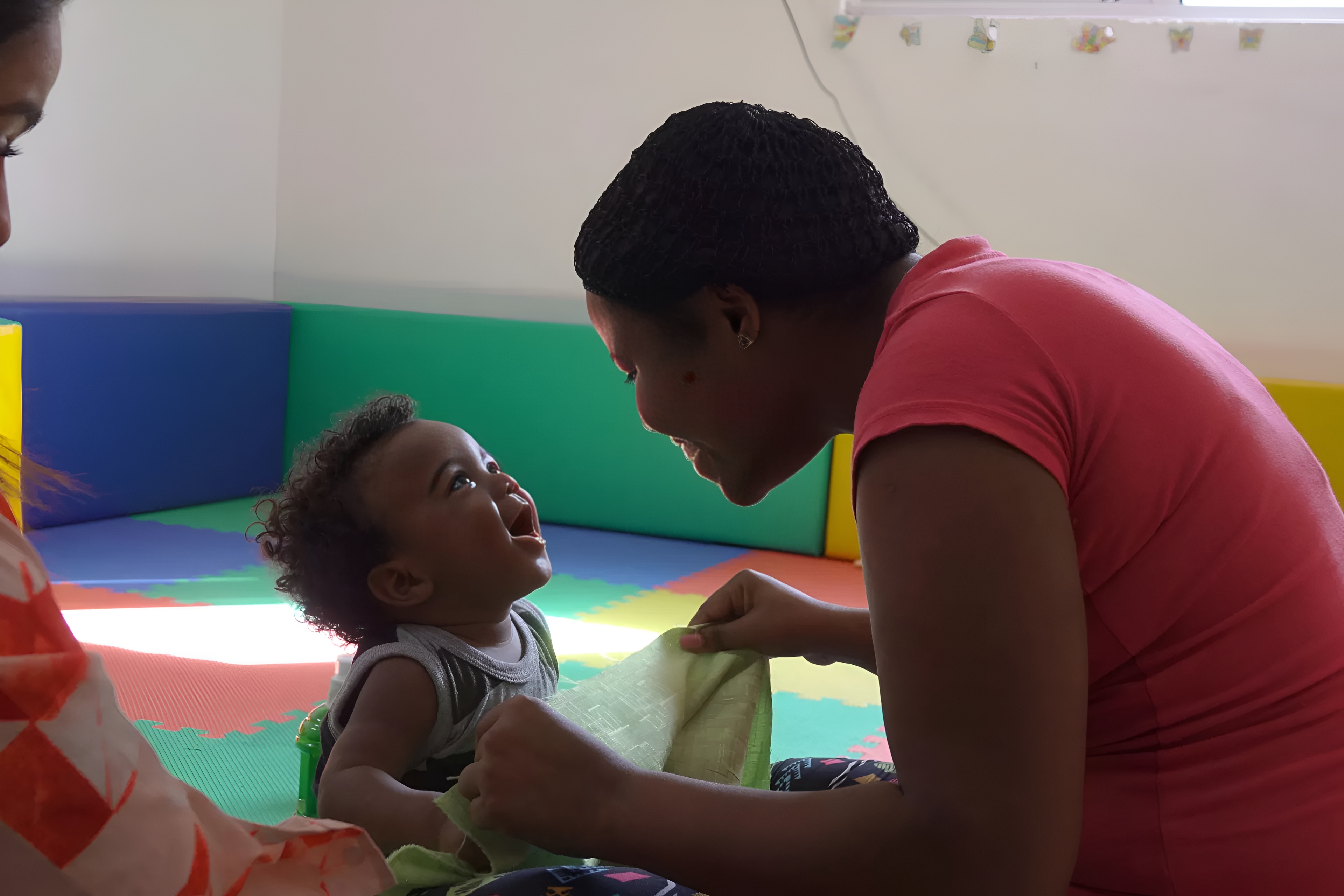
One day, Isabel’s friend told her about the UN-supported Communities of Care Programme. Interested, Isabel learned that it supported local childcare centres and caretaker services for the elderly. Isabel registered and, after a few months, María was enrolled in a local centre and Patricia was assigned a caretaker to accompany her to doctor’s appointments.
Much to their relief, Ángel was able to quit his second job and Isabel returned to school. If raising a child or caring for a parent takes a village, the Communities of Care Programme is a villager supporting the Government and local communities through collaboration and coordination.
New beginnings for caregivers
With financing from the Joint SDG Fund, the programme is overseen by the Resident Coordinator’s Office and implemented by the UN Development Programme (UNDP), UN Population Fund (UNFPA), UN Women and the International Labour Organization (ILO), in partnership with Government agencies. The programme aims to design care policies, training and information systems to promote women’s economic autonomy and the rights of children, care workers, older persons and people with disabilities.
Ultimately, it envisions a world where women are not forced into unpaid care work but also empowered to pursue it if they please – and supported if they one day need the same care.
“The Communities of Care Programme is about systemic and community engagement,” says Julia Sanchez, UN Resident Coordinator in the Dominican Republic. “By developing national policies with our partners and engaging local youth and older persons, we are creating change every step of the way.”
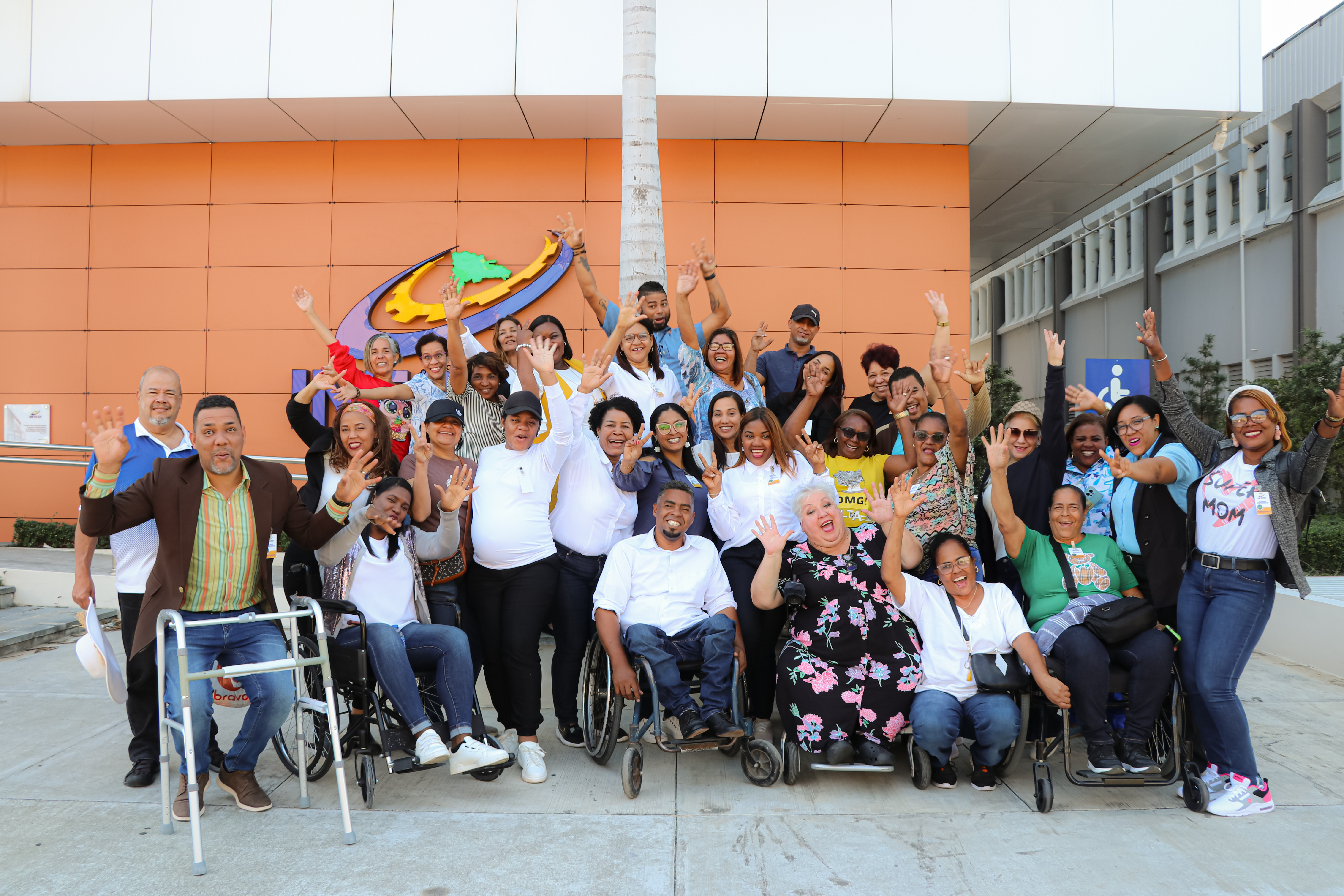
The UN collaborated with 11 Government agencies to update care training by developing new teaching guides and criteria for validating care workers' skills. To measure the impact of these trainings, UNFPA supported the development of an innovative quality-measurement tool for senior services. The tool not only evaluates the strengths and weaknesses of care services but also measures user satisfaction.
Beyond technical drafting, with guidance from the National Institute of Technical Vocational Training, the ILO ensured that these training programmes align with the National Qualifications Framework to streamline formal job opportunities for graduates.
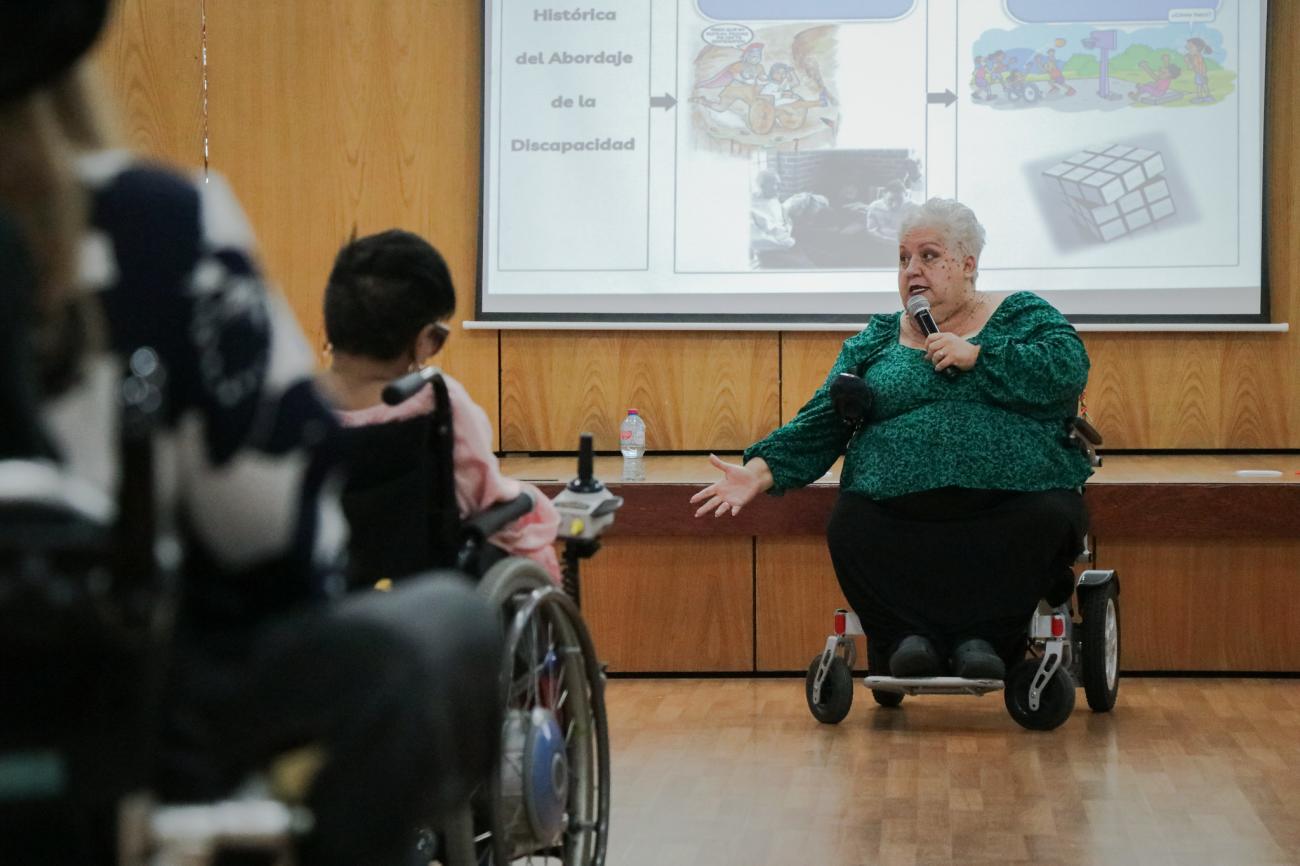
These teaching guides were also essential for implementing the Dominican Republic’s first and only programme on personal support for people with disabilities. The ILO provided its expertise in designing a new curriculum that is centred on independence and human rights, moving away from a model narrowly focused on physical well-being.
Likewise, UNDP supported the development of a georeferenced mapping platform for care services, which identifies the supply and demand of care across territories. This tool connects communities with available services and strengthens planning for the expansion of the national care system.
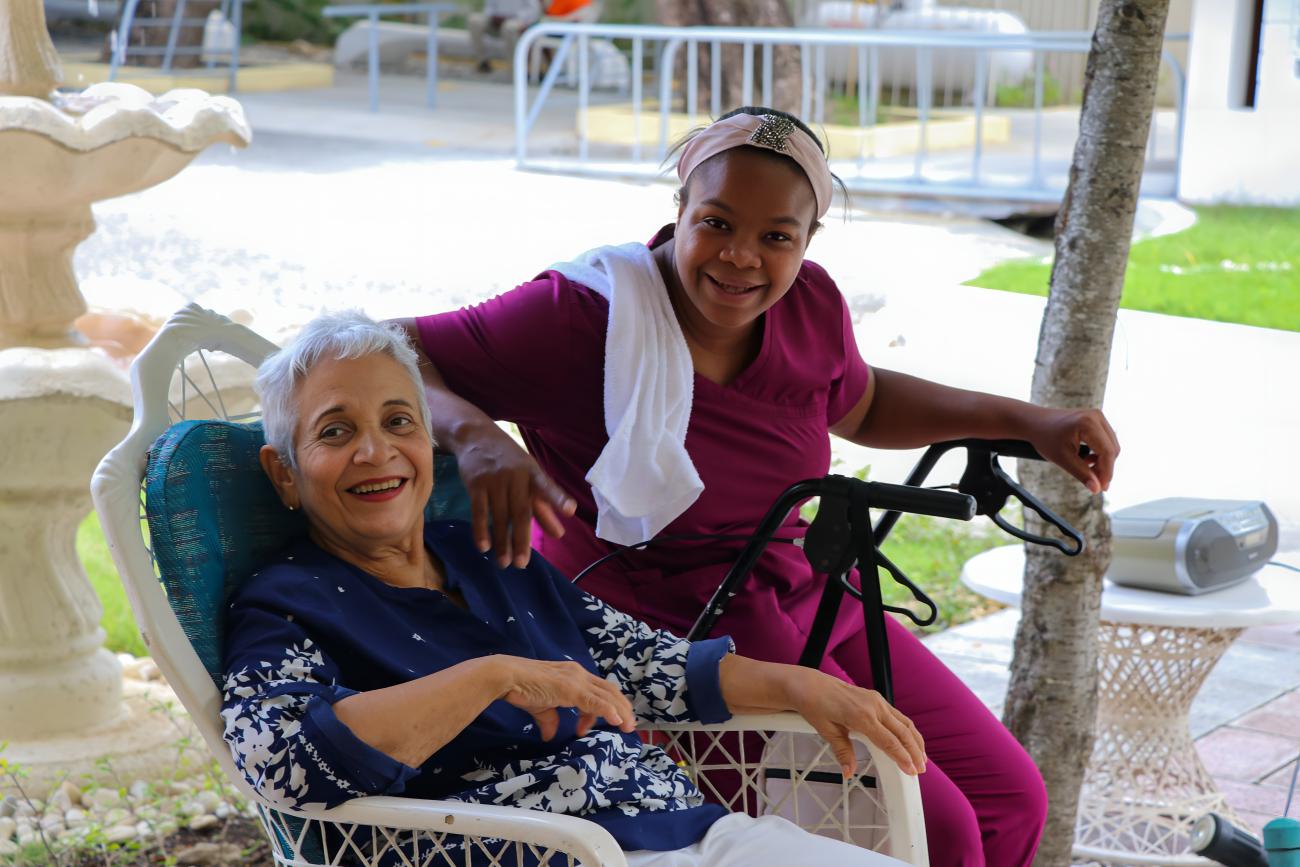
These changes have made all the difference for seniors like Rosa Velázquez, a resident of the UNFPA-supported Nuestra Señora del Carmen care home for older women. "I feel good because I have received a lot of affection and respectful, humane treatment," she says, noting that she has access to reliable physiotherapy services.
A top-down approach
Overarching policies ensure that success stories like Rosa's and Isabel’s are the norm rather than the exception.
The programme therefore supported the design and implementation of the Dominican Republic’s first National Care Policy, with the goal of eventually producing a permanent national care system. This led to the creation of the Intersectoral Care Committee to coordinate 11 member institutions and ensure a common vision for care services at the national level.
Complementing the Intersectoral Care Committee, the UN also worked on forming Local Care Committees that reach communities on the ground. These committees are an entry point for local Governments and NGOs to make decisions and address residents’ most pressing care concerns. In this spirit, UN Women collaborated with the Government on a new methodology for identifying community needs and mapping existing services.
In a step towards a comprehensive care policy, the UN supported the drafting of a baseline document for a proposed care system law. As part of this process, the UN worked with the Government and local communities in performing a “household sweep” in Santo Domingo, where over 9,200 home interviews were completed to better understand care needs and vulnerable households.
“A draft care law is currently under discussion, and the country has gained major practical experience through this programme,” says Julia Sanchez, UN Resident Coordinator in the Dominican Republic. “Three more municipalities have expressed interest in piloting the programme’s localised approach to care.”
Committees, methodologies, and policies are the tools that build the foundation for a sustainable national care system that, true to its name, leaves no one behind.
A more caring world for everyone
As women all over the world spend a disproportionate amount of time on unpaid care work, the Communities of Care Programme delivers more than short-term support: it is a model for villages, towns, cities and metropolises to replicate.
Back in Azua, little María has made friends at her day centre, and Patricia’s health has gradually improved. The impact on Isabel and Ángel’s lives is hard to quantify.
“We now have more time for ourselves and for each other,” Isabel says. “And we’ve found a way to fairly split the household tasks.”
Isabel’s experience is proof of what happens when local, national and international partners join forces. Through policy and action, the women who look after everyone else are empowered to meet their full potential.
Please visit the UN team's website for more information about the UN's work in the Dominican Republic.