A Gender-Transformative Course on the Missing in Lebanon Strengthens Non-Recurrence
Lebanon’s first gender-focused course on the missing and disappeared uses education to preserve memory, foster justice and empower new generations.
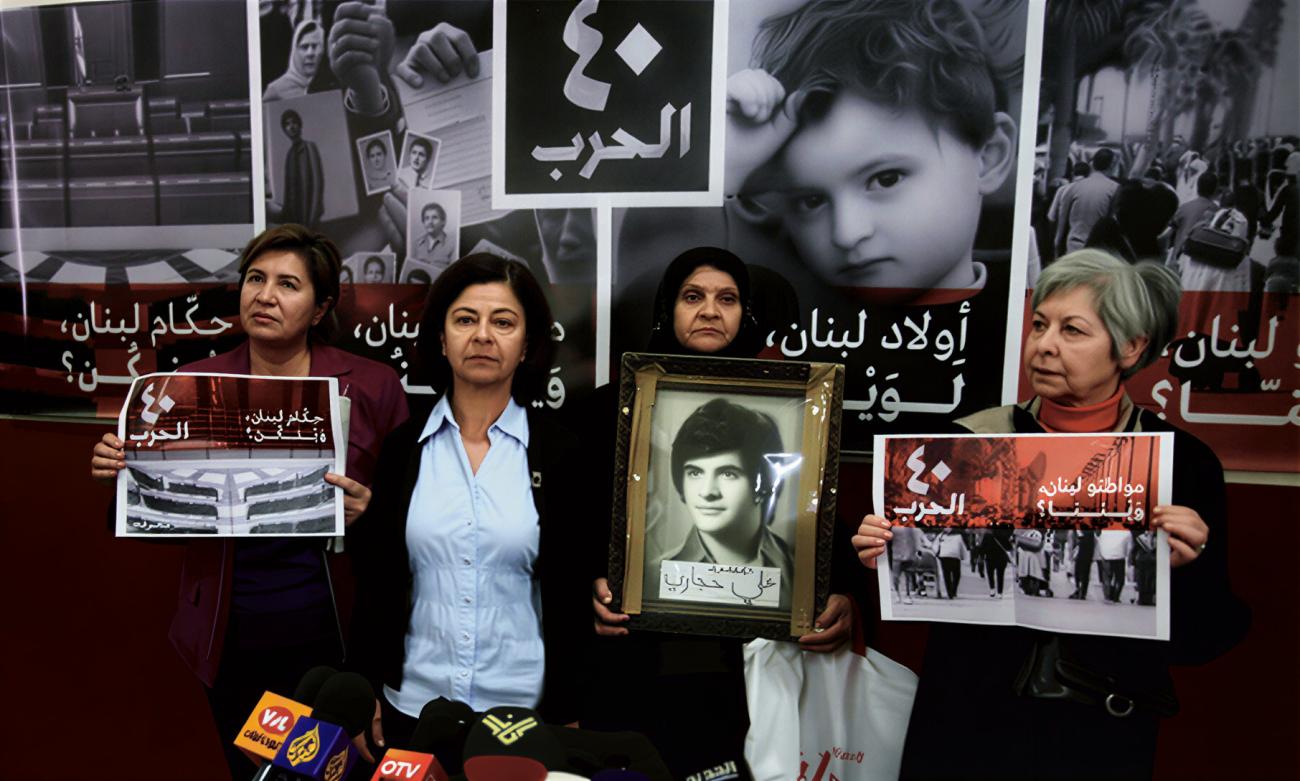
“Since 1983, our feet have worn out from endlessly chasing news. I still sit at home thinking the door might knock any minute… I will kiss his feet if he comes back. I have never been able to accept it, as if he left only yesterday. I tell my children: I won’t forgive you if I die and you don’t ask about your brother,” says Muntaha Haidar, mother of a disappeared person.
For Muntaha, the search for truth has been a lifelong journey marked by loss and persistence. Her son disappeared during Lebanon’s civil war, leaving behind questions that no one could answer. Decades later, her story has become part of a new collective effort to keep memory alive. As one of the women who shared their testimonies in a new online course on the missing and forcibly disappeared, Muntaha speaks of pain and endurance, reminding learners that remembrance is also an act of justice.
Across Lebanon, thousands of families like Muntaha’s continue to wait for answers. Nearly four decades since the end of the civil war, the fate of an estimated 17,000 people remains unknown. While the 2018 Law 105 established the National Commission for the Missing and Forcibly Disappeared, many families and advocates believe that real justice also depends on preserving collective memory and helping new generations understand this chapter of history as their own.
This is where education becomes a bridge between remembrance and reform.
“This initiative directly supports the Government’s efforts to strengthen national capacities for truth‑seeking and social recovery. By embedding these themes into education, we are contributing to Lebanon’s broader development trajectory, one where empowered institutions, informed citizens and gender‑responsive policies work together to help ensure that such suffering is never repeated,” explained UN Deputy Special Coordinator, Resident and Humanitarian Coordinator for Lebanon, Imran Riza.
Education as a bridge to justice
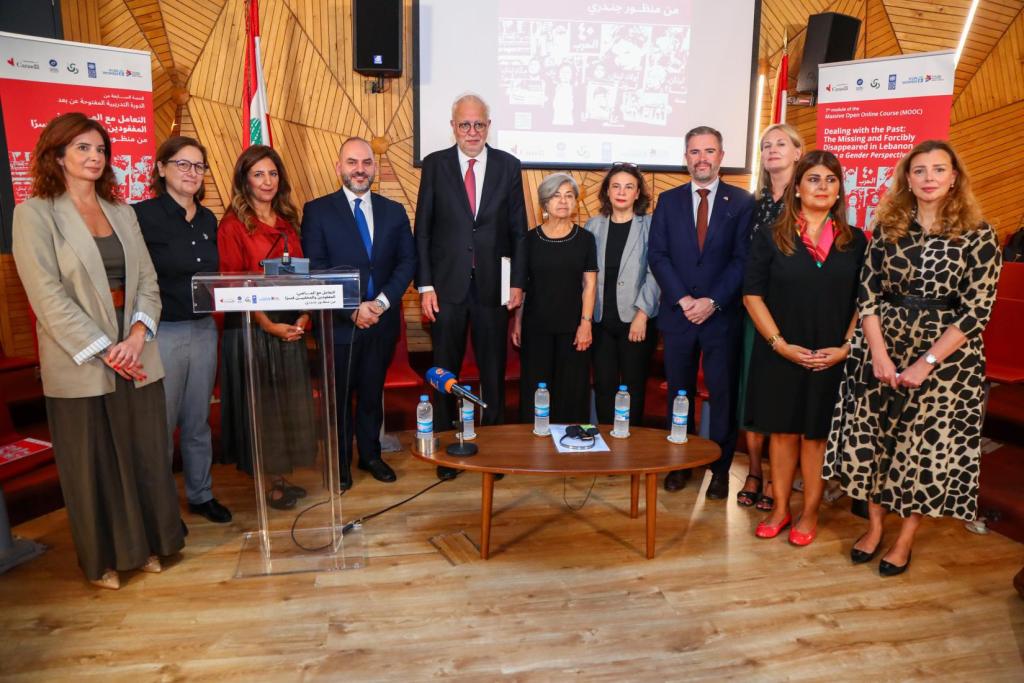
Lebanon’s first Massive Open Online Course (MOOC) on the missing and forcibly disappeared from a gender perspective was launched in October 2025. The course was developed by SEEDS for Legal Initiatives and La Sagesse University, in partnership with UN Women and the UN Development Programme (UNDP), with the contributions of the Office of the United Nations High Commissioner for Human Rights (OHCHR) and the support of the Government of Canada. It explores the legacy of the missing through a human rights and gender lens, connecting the struggles of the past to the responsibilities of the present.
Through video lectures, testimonies and interactive materials, the course allows learners to understand how women – mothers, partners, sisters and daughters – have carried the emotional, social and economic burden of enforced disappearances while leading the fight for truth and justice.
From loss to learning: Education, empathy and dialogue
With the UN’s support, this initiative turns pain into education and activism into curriculum. As one of the first academic resources on gender and transitional justice in Lebanon, it provides teachers, students and practitioners with tools to analyse the interplay between enforced disappearance, gender and human rights – topics that were long absent from university programmes.
Since its launch, the course has drawn wide interest from students and civil society actors, with hundreds enrolling to explore how memory and justice intersect. Several universities are moving to integrate it in their curricula; La Sagesse University already uses it as a key reference in its legal studies program.
One student who completed the course said it reshaped her understanding of Lebanon’s past and of her own family’s story. “While watching the videos at home, my father sat beside me, listening to every word,” she said. “That’s when I discovered my grandfather was among the disappeared – a story my family had never spoken about.”
This human impact – shifting attitudes, deepening empathy and bridging generations – is what makes the course transformative. Designed to spark dialogue between academics and policymakers on integrating transitional justice into education, it also encourages families and young people to speak about remembrance and healing across generations. For students, the MOOC offers a safe space to discuss the war years and their aftermath, something rarely done openly in Lebanon. For families of the disappeared, it offers recognition that their decades-long struggle is not forgotten.
The course’s success reflects a growing commitment to address Lebanon’s legacy of conflict through inclusive and gender-transformative approaches. By advancing the Women, Peace and Security Agenda as a tool for transitional justice, the course shows how women’s experiences and agency are central to peacebuilding, offering a resource that women’s rights organizations and community peacebuilders can use to train young mediators and community activists on memory, dialogue and accountability.
Towards a culture of truth and non-recurrence
The initiative reinforces collaboration between Lebanese academic institutions and civil society, turning universities into spaces of reflection and social change. Through the partnership between SEEDS for Legal Initiatives and La Sagesse University, the MOOC shows how national actors, supported by UN entities and international partners, can lead innovation in transitional justice and contribute to intergenerational dialogue about Lebanon’s violent past.
Beyond its immediate reach, the course has the potential to shape broader reform efforts in Lebanon. As more educators and policymakers engage with its content, it could influence how history and civic education are taught, helping future generations to discuss Lebanon’s conflicts with openness and empathy.
While education cannot replace long-awaited answers, it helps build a shared national memory that honours the disappeared and reinforces a commitment to justice and non-recurrence. By bringing remembrance into classrooms, the MOOC ensures that young people understand these violations, empathise with affected families and help prevent such injustices from happening again.
This story was co-drafted by Ms. Diana Assaf (UN Women) and Ms. Kawsar Fahs (UNDP), with the support of Ms. Nadine Abi Zeid Daou (RCO/UNIC Beirut). The accompanying videos were produced by SEEDS for Legal Initiatives.
Lebanon’s first Massive Open Online Course on the missing and forcibly disappeared would not have been possible without the generous support from the Government of Canada, one of Lebanon’s top donors. Since 2016, Canada has contributed almost $540 million to Lebanon, strengthening protection, gender equality, social stability, food security and health, among others. Canada is also a strong champion of pooled funding, supporting both the Lebanon Humanitarian Fund (LHF) and the Lebanon Recovery Fund (LRF). Further details on international assistance to Lebanon are available in the Lebanon Aid Tracking reports.
This story was originally published by the UN in Lebanon team. Read more about the UN's work in Lebanon on the UN team's website.





Latest news and updates